Pisto Manchego: Spanish Vegetable Stew with Fried Egg
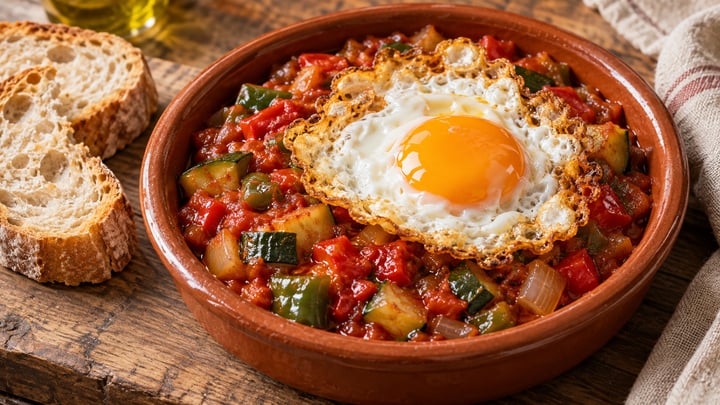
The pisto cooks slowly until the tomato reduces and thickens. The fried egg goes on top straight from the pan, so the yolk can be mopped up with bread.
Pisto manchego is the vegetable stew of La Mancha: onion, bell peppers, zucchini and tomato cooked slowly in olive oil until they reduce to a thick sauce. In Spain it's served as a tapa or a main dish, topped with a fried egg so you can dip into the yolk, and unlike ratatouille the vegetables cook together in the same skillet, almost like a jam.
Ingredients
- 4 tablespoons olive oil, plus more for frying the eggs
- 1 large onion, chopped
- 1 green bell pepper, diced
- 1 red bell pepper, diced
- 2 garlic cloves, minced
- 2 zucchini (courgettes), cut into 1 cm dice
- 800 g ripe tomatoes, grated or crushed
- 1 teaspoon sugar (if the tomatoes are acidic)
- Salt
- 4 eggs
- Bread, for serving
Method
- 1
In a wide skillet or Dutch oven, heat the 4 tablespoons of oil and cook the onion over medium-low heat for 10 minutes, until translucent.
- 2
Add the bell peppers and garlic and cook for 10 more minutes, stirring now and then.
- 3
Add the zucchini, season with salt and cook for 10 minutes, until tender.
- 4
Stir in the tomatoes and simmer uncovered over low heat for 25-30 minutes, stirring occasionally, until the liquid evaporates and the pisto is thick and glossy. Patience is the whole recipe: if you turn up the heat, it sticks before it concentrates. Balance the acidity with the sugar if needed.
- 5
When it's almost ready, fry the eggs in plenty of very hot olive oil, spooning the oil over them so the whites get crispy, lacy edges and the yolks stay runny.
- 6
Serve the pisto in small bowls or shallow bowls with a fried egg on top and bread for dipping into the yolk. It's also eaten cold the next day, on toast.