Pulpo al Olivo: Black Olive Mayonnaise
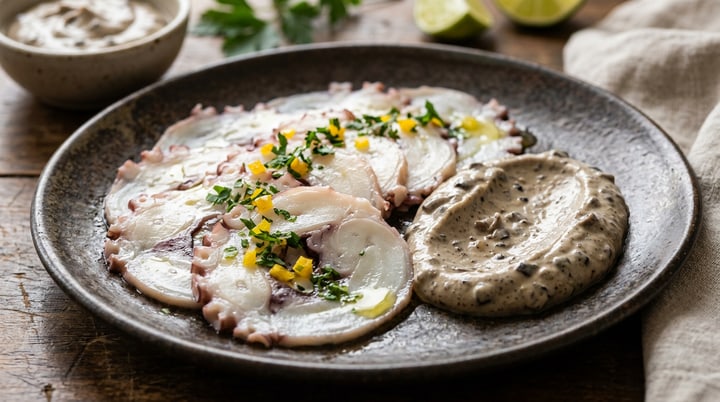
The dish that Rosita Yimura created in 1987 at her Salón Rosita and which ended up being the emblem of Nikkei cuisine: thin slices of octopus under a homemade black olive mayonnaise. What determines the result are two temperatures — the octopus enters the water little by little, "scared," so the skin does not tear, and then it spends a couple of hours in the freezer, because thin and even slices only come out with semi-frozen meat.
Ingredients
- 1 octopus of 3 kg (available frozen)
- 1 egg
- 10 large black olives, pitted
- 200 ml extra virgin olive oil (approx.)
- 2 large tbsp lime or lemon juice
- 1 tsp salt
- Pepper to taste
- 1 handful of parsley (for garnish)
- 2 yellow chili peppers (for garnish)
Method
- 1
Thaw the octopus in the refrigerator the day before and, if there is any ice left the next day, finish it under a thin stream of cold water. If you get it fresh and recently caught, it still needs to be frozen for about 48 hours: the cold breaks the fibers and is what prevents it from being tough. The old alternative —beating it with a rolling pin— seeks exactly the same thing.
- 2
Heat plenty of water in a large pot (saucepan) over high heat until it boils, without salt or any other additions.
- 3
Before leaving it inside, "scare the octopus": submerge it for a few seconds, take it out for the same amount of time, and repeat the operation three times. It is not superstition — this way it takes temperature little by little and the skin does not tear due to the violent contraction of the meat.
- 4
When the water boils again, lower the heat, cover the pot, and cook for about 25 minutes. The time is not exact: a Spanish or Moroccan octopus takes almost half the time of a Chilean one, from colder waters and tougher meat, and a thick tentacle matters more than the total weight.
- 5
Pierce the thickest tentacle with a toothpick, in the part close to the head. If it goes through without resistance, it is ready; if not, cover and test again every 5 minutes. What cannot be fixed is overcooking: overcooked, the octopus hardens again.
- 6
Turn off the heat and leave the pot uncovered so that the water loses temperature on its own.
- 7
About 10 minutes later, remove the octopus by holding it by the head with tongs and let it cool to room temperature. From start to finish, the recipe avoids sudden temperature changes.
- 8
Cut the tentacles with scissors, once cold.
- 9
Line a plastic container with plastic wrap, arrange the tentacles inside, cover, and take them to the freezer for a couple of hours.
- 10
For the mayonnaise, put the egg, the 2 tablespoons of lime or lemon juice, and the teaspoon of salt in the blender. Be careful with the salt: if the olives come in brine, they already have plenty.
- 11
Add the extra virgin olive oil in a thin stream with the blender on the lowest speed, until the mayonnaise reaches a consistent texture.
- 12
Add the pitted olives and blend until they are completely amalgamated with the mayonnaise.
- 13
Adjust the salt, add ground pepper to taste, and reserve in the refrigerator. Without Peruvian botija olives it will not have that purple color, but the flavor is the same.
- 14
Take the tentacles out of the freezer and let them thaw at room temperature, or under the tap if you are in a hurry. It is convenient to work with them semi-frozen: this is what allows for cutting thin and even slices.
- 15
Cut on the bias with a very sharp knife.
- 16
Serve the slices distributed to taste, with parsley cut into thin strips on top and a good portion of the olive mayonnaise on the sides. Add the tip of the tentacle, drizzle with extra virgin olive oil, and finish with the finely chopped yellow chili pepper.