Traditional Scones (Classic, Moist, and Fluffy)
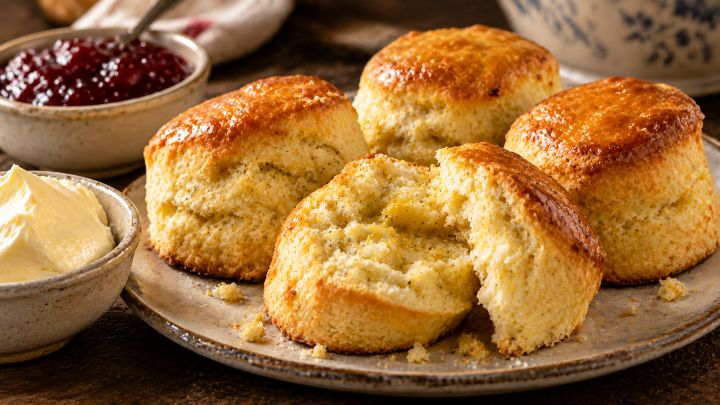
Do you want to learn how to prepare classic traditional English scones to accompany your afternoon tea with a tender, moist texture that melts in your mouth? We teach you the technical step-by-step to achieve a perfect cold sandy texture, the secret of the direct cut without twisting the mold to achieve that iconic height, and the key to not over-kneading. An infallible, quick, and economical recipe that is ready in just half an hour. Follow the Recetop guide and enjoy them warm with dulce de leche, butter, or homemade jam!
Ingredients
- 500 g self-rising flour (or all-purpose flour + 20 g baking powder)
- 120 g cold butter cut into small cubes
- 100 g granulated sugar
- 1 pinch of fine salt
- 2 large eggs (1 for the dough and 1 beaten for brushing)
- 150 ml cold milk (or heavy cream for more creaminess)
- 1 tsp vanilla extract or essence
- Optional: zest of 1/2 lemon
Method
- 1
In a large bowl, place the flour together with the sugar and the pinch of salt (and the baking powder if you are using all-purpose flour). Incorporate the very cold butter cut into small cubes. Create a sandy texture with a dough scraper (bench scraper) or your fingertips quickly, avoiding transferring heat from your hands, until you achieve a texture similar to coarse sand with small pieces of butter still visible.
- 2
In a separate container, mix the cold milk with 1 egg, the vanilla essence, and the lemon zest (if you decide to use it).
- 3
Make a well in the center of the sandy mixture and pour in the liquids. Integrate with a spatula or with your hands by pressing inward, joining the ingredients without kneading at any time. The secret to keeping them tender and flaky is not to develop gluten.
- 4
Dump the dough onto a lightly floured countertop. Unify gently with your palms and give it an even thickness of about 2-2.5 cm high (it is essential not to leave them thin so they reach good height in the oven).
- 5
Cut the scones with a floured circular cutter (5 or 6 cm in diameter), pressing directly from top to bottom in a single stroke, without twisting the cutter so as not to seal the edges and allow them to rise evenly.
- 6
Place the pieces on a baking sheet with parchment paper or lightly greased, separated by a couple of centimeters. Brush the surface with the remaining beaten egg, being careful that it does not drip down the sides so as not to block the rising.
- 7
Bake at 190-200 °C (preheated moderate to high oven) for 12-15 minutes, until the base and surface look golden. Let them cool slightly on a wire rack and serve them with jam and butter or cream cheese.