The secret to the perfect steak
A golden crust on the outside and juicy on the inside does not depend on the meat, but on three things done before it touches the skillet: a dry surface, a very hot skillet, and salting at the right moment.
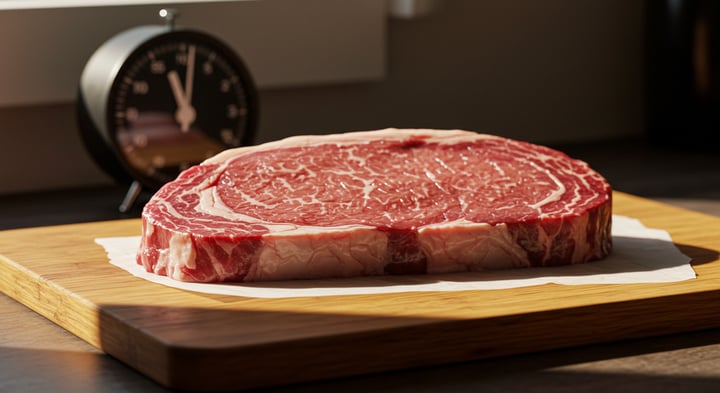
A well-made steak has a golden, crispy crust on the outside and remains juicy on the inside. This is not determined by the cut or the grill: it is determined by three things that happen before the meat touches the heat. None of them take time, and skipping any of them is noticeable on the plate.
One: the surface must be dry
A golden crust appears above 140-150 °C (or 284-302 °F). Water, while present, does not exceed 100 °C (212 °F). A steak with a damp surface boils in its own steam before browning, and by the time it finally browns, the center is already overcooked.
Dry it with paper towels, pressing down, on both sides, just before cooking. It is the step that changes the result the most and the one most often skipped.
Two: the skillet, very hot and without moving the meat
The skillet or pan must be very hot before placing the steak: if a drop of water dances instead of evaporating upon contact, it is ready. With a lukewarm skillet, the meat releases juice and cooks in it.
Once placed, do not move or poke it. Flip it only once, when the crust peels away from the skillet on its own. If it is stuck, it is not ready yet.
And do not crowd the skillet: two steaks together lower the temperature and cause them to boil again. It is better to do one at a time.
Three: salt, at the right moment
Salt draws water out of the meat. If it is salted 10-20 minutes before, that water remains on the surface just when it needs to brown — it is the worst moment.
There are two good windows: just before cooking, when the salt has not yet had time to draw anything out; or 40 minutes or more before, when the water has already been reabsorbed and carried the salt inside. Either one works; the middle ground does not.
Taking it out of the fridge early: it helps, but less than people say
The advice to take the meat out 30 minutes before helps with a thick cut, where a frozen center forces the outside to overcook before the middle reaches the desired doneness. In a thin steak, the center rises a couple of degrees in 30 minutes and it changes almost nothing.
It does no harm to do it. But if time is short, prioritize drying it well and heating the skillet well: that matters much more.
After: let it rest
Five minutes on a warm plate before cutting. With heat, the juices concentrate in the center; with resting, they redistribute. If cut immediately, the juice stays on the cutting board and not in the meat.
Frequently asked questions
Should salt be added before or after cooking?
Just before or 40 minutes before; both work. What is not advisable is the middle ground —10-20 minutes before—, because it leaves the surface wet at the moment of browning.
Oil in the skillet or on the meat?
On the meat, a thin layer. This way the skillet can be very hot without the oil burning before placing the steak.
How do I know it is done without cutting it?
By pressing with your finger: soft is rare, firm is medium, hard is well-done. With practice, it becomes easy; with a meat thermometer, no practice is needed: 55 °C (131 °F) for rare, 60 °C (140 °F) for medium, 70 °C (158 °F) for well-done.
Should the meat be taken out of the fridge beforehand?
In a thick cut, it helps it cook evenly. In a thin steak, it changes little; what matters is a dry surface and a very hot skillet.