Baked Chicken Casserole
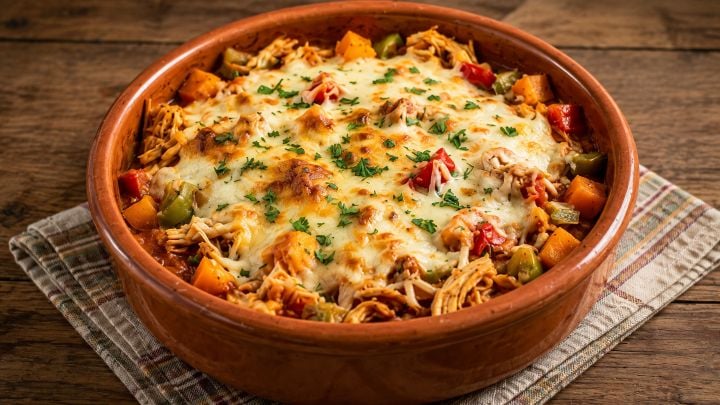
Comfort food that balances seasonal vegetables against a properly browned cheese crust, with fresh herbs and a splash of white wine behind it.
The squash goes in with the hot stock and comes out while it still holds its shape. Cooked further it dissolves into the sauce and the casserole loses its texture — you want cubes you can find, not a purée.
The herbs go in as whole sprigs and come out before serving: they perfume the pot without leaving woody stems on the plate.
For chicken with almost nothing else at all, see the crispy roast chicken with butter and lemon.
🔎 What is winter squash? — where it comes from, what goes in it and how it differs.
Ingredients
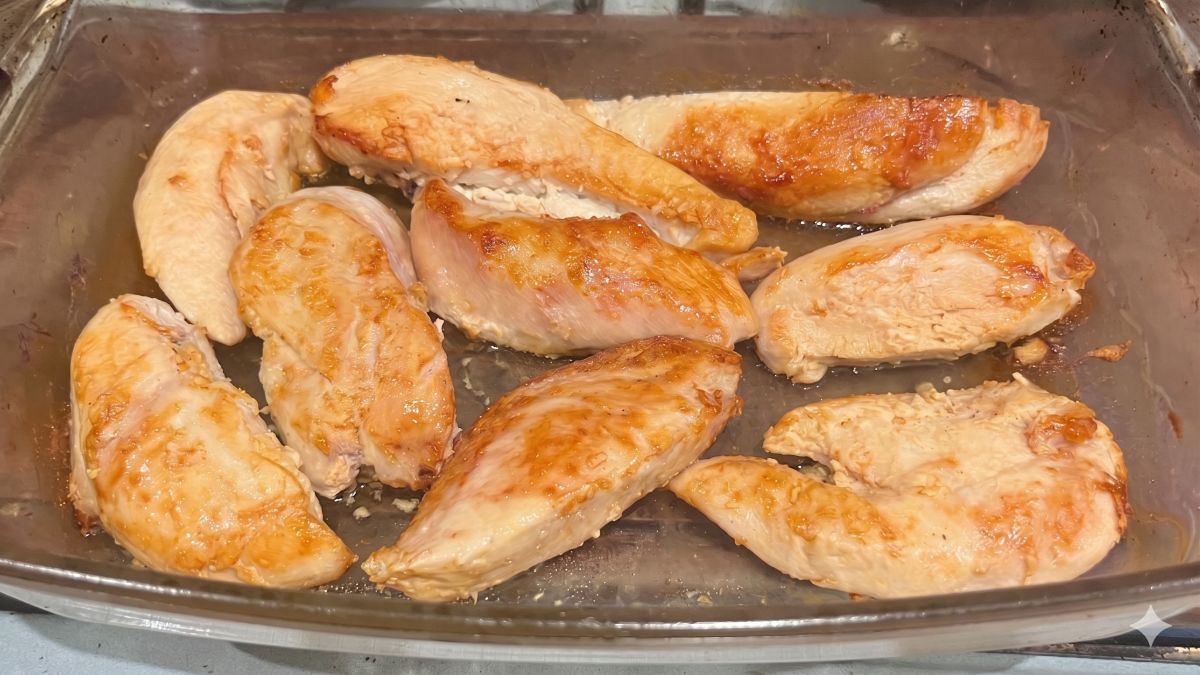
- 4 chicken breasts, cooked and shredded (serves 6)
- 1 onion, finely chopped
- 1 green and 1 red bell pepper, diced
- 1 carrot, in small cubes
- 300 g squash, in small cubes
- 2 celery stalks, finely chopped
- 2 garlic cloves, chopped
- Tomato purée, as needed
- White wine, as needed
- Hot vegetable stock, as needed
- 100 g mozzarella, grated
- Grated cheese, to taste
- Fresh herbs (bay, thyme, rosemary)
- Oil, salt and pepper, to taste
Method
- 1
In a large pot with oil preheated over low heat, cook the onion, the peppers, the carrot, the celery and the garlic. Stir often so they brown evenly.
- 2
Once the vegetables are tender, add the tomato purée and a splash of white wine. Cook until the smell of alcohol has completely gone.
- 3
Add the hot stock and the cubes of squash. Cook over medium heat until the squash is tender but still holds its shape — cooked further it dissolves into the sauce.
- 4
Add the shredded chicken and the bundle of fresh herbs. Mix well and cook for 15 minutes more so the flavors combine.
- 5
Turn off the heat, remove the herb sprigs and adjust the salt and pepper.
- 6
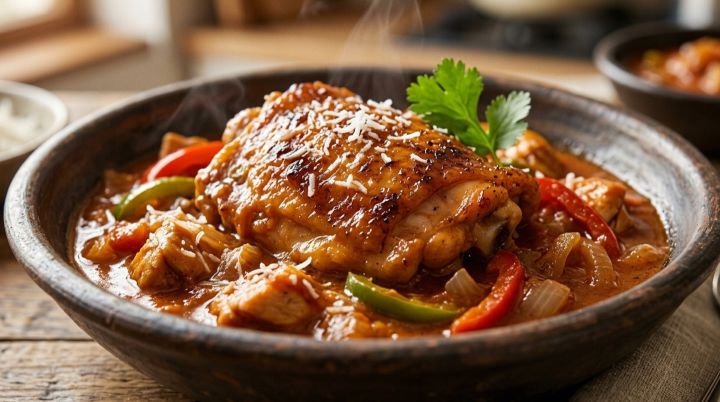
Divide between individual dishes and cover with the mozzarella and grated cheese.
- 7
Put them under a hot oven to brown, until the surface is golden and crisp.
Frequently asked questions
Can I use a soft, creamy cheese instead of mozzarella?
Yes, with one condition: if you go for a soft creamy cheese, always mix it with a good amount of grated hard cheese (Parmesan, Pecorino or a young mountain cheese).
The hard cheese absorbs part of the moisture from the soft one and gives the surface the structure it needs to brown under the grill. Without it the crust stays pale and watery instead of turning golden.
How do I keep the squash in shape instead of turning it to purée?
It comes down to the size of the cut and the cooking time.
Cut the cubes at least 2 cm across. They go into the pot together with the hot stock, and from that point on they need watching: as soon as a fork goes in with slight resistance, the hard boiling stops.
Do not forget that the squash gets another hit of heat in the oven while it browns. Cook it completely soft in the pot and you end up with purée.
Which kind of squash works best for this casserole?
Butternut or kabocha are the best choices. Both have firmer, less watery flesh than the large field pumpkins, and that is exactly why the cubes hold their shape after cooking in the stock.
Big carving pumpkins and watery varieties fall apart — they are good for soup, not for this dish.
Can I use chicken left over from another meal?
Absolutely — this recipe is ideal for it.
If you already have cooked chicken (leftover roast chicken, for instance), skip boiling the breasts and simply shred the meat into the dish at step 4. The casserole comes out even fuller and more rustic in flavour, because roasted meat brings more browned flavour with it than poached meat does.
Do I really have to take the bundle of fresh herbs out?
Yes, it matters. At step 5 the bay, thyme and rosemary come out before the mixture goes into the individual dishes.
That way the aroma the herbs have given up stays in the dish — without anyone at the table biting into a woody twig.
Chicken
Chicken is the wild card of everyday cooking: it stretches, it is cheap and it takes almost any technique. These are the recipes where it stops being a fallback and becomes the dish — stuffed, pan-fried, braised, with sauces built to keep it juicy instead of dry.