Fatayer and Lahmacun – Arab Meat Turnovers
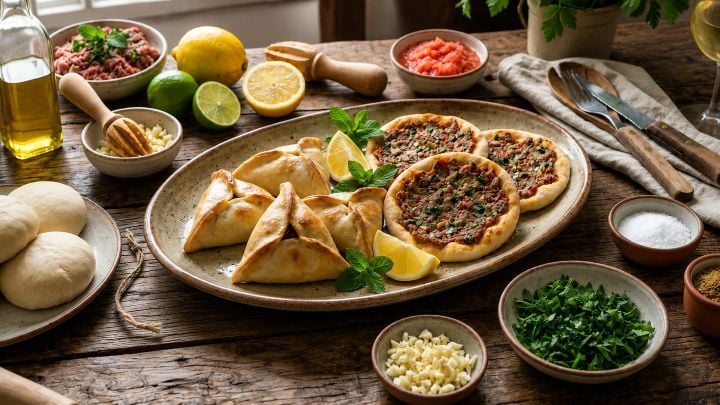
Two classics from one dough and one filling, differing only in shape: fatayer are folded into a triangle and keep their juices inside; lahmacun (in Argentina lashmayin) stay open, spread flat, and come out crisper.
The meat goes in raw and only cooks in the oven — which is why it is kneaded thoroughly by hand with onion, tomato, mint and spices, so it binds completely. The dough is a soft, elastic bread dough, and the fast bake above 200 °C is what traps the natural juices of the filling without the dough losing its structure.
For a genuinely professional result, use good-quality mince — or even a mixture of beef and lamb — lifted by the freshness of the mint and the indispensable squeeze of lemon at the end, which balances the fat and brings out every spice. The dough: dough for Arab turnovers.
Ingredients
- 1 kg all-purpose flour (plain flour)
- 20 g fresh yeast
- 1 level tbsp salt
- 4 tbsp olive oil
- 300 ml water
- 300 ml milk
- 500 g lean ground beef (beef mince)
- 3 plum tomatoes, grated
- 1 tbsp tomato paste
- 6 tbsp onion, finely chopped
- 3 tbsp red pepper, finely chopped
- 4 tbsp fresh mint, chopped
- 4 tbsp fresh parsley, chopped
- 1 tsp chopped garlic
- 1 tsp chilli flakes
- 1 tsp sweet paprika
- 1 level tbsp cumin
- Salt and black pepper, to taste
Method
- 1
The dough: make the dough following the recipe for Arab turnover dough. Let it rise covered for one hour before carrying on.
- 2
Portioning: knock the dough back and cut balls of 30-35 g. Roll them into circles 1 to 2 mm thick. Let them rest on a floured tray for 20 minutes.
- 3
The filling: mix all the ingredients of the raw meat filling and knead with your hands until they are completely combined.
- 4
Shaping the lahmacun (open): put 2 tablespoons of filling on the discs of dough and spread it flat, out to half a centimetre from the edge.
- 5
Shaping the fatayer (triangular): put 3 tablespoons of filling in the centre and fold in from three sides to make a triangle, leaving a small opening in the middle.
- 6
Baking: bake at a high temperature, above 200 °C. The round ones take 10 minutes; the triangular ones a few minutes longer, until they brown and start to release juice.
- 7
Serving: serve with fresh lemon wedges — the acidity belongs to the dish, it is not a garnish.
Frequently asked questions
What is a fatay?
A fatay (fatayer) is a triangular Middle Eastern pastry made from a light yeasted dough, with raw meat sealed inside that cooks together with the dough.
Unlike Argentine criollo empanadas, it is baked above 200 °C. That creates a steam chamber inside, which keeps the filling very juicy and the dough soft. The closed triangular shape is what distinguishes it from the lashmayin (lahmacun), which stays open.
What makes the Middle Eastern dough different from ordinary empanada pastry?
The yeast. Classic criollo empanada pastry is a shortcrust built on fat, with a firm structure; this dough is technically a flatbread.
Because it has yeast and milk in it, it is far more elastic, softer and lighter. It has to be: it needs to absorb the juices the raw meat gives up as it bakes, without tearing and without going hard.
Can I use shop-bought empanada discs or puff pastry instead?
You can, but it will be a different dish. Ready-made empanada discs — and puff pastry all the more so — are designed for cooked, dry fillings.
With puff pastry and this filling, the base soaks up the meat juices and never crisps. If you have to use them for lack of time, drain the filling very well before you assemble.
Does the meat really cook through in the oven if it goes in raw?
Yes — and that is the whole secret of how juicy they are.
The meat is finely chopped and mixed with acid (tomato, and lemon if you like), so it cooks quickly at over 200 °C. The juices from the meat and the vegetables stay trapped in the dough instead of evaporating in a pan. You do not get this result with meat that has been fried first.
What is the difference between fatay and lashmayin?
The flavour is the same; the difference is in the shape and the final texture.
The lashmayin stays open, like a small pizza: the meat is exposed, so it browns more and the dough comes out a little firmer. This is the Argentine-Arab version of the lahmacun you will know from any Turkish restaurant.
The fatay is sealed into a triangle. That creates a steam chamber inside, which keeps the meat especially tender and the dough moist and soft.