What is ají amarillo?
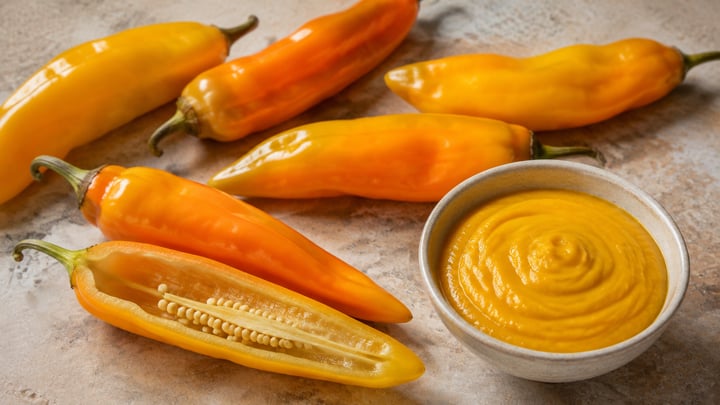
The chilli that half of Peruvian cooking rests on: why it is milder than its reputation, what forms it comes in outside Peru, and what happens if you swap it for bell pepper.
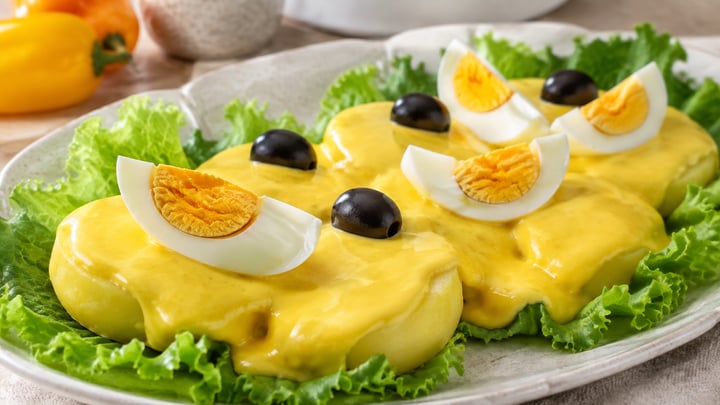
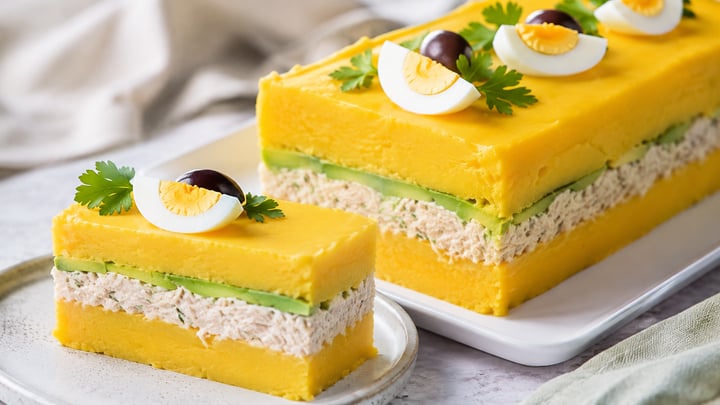
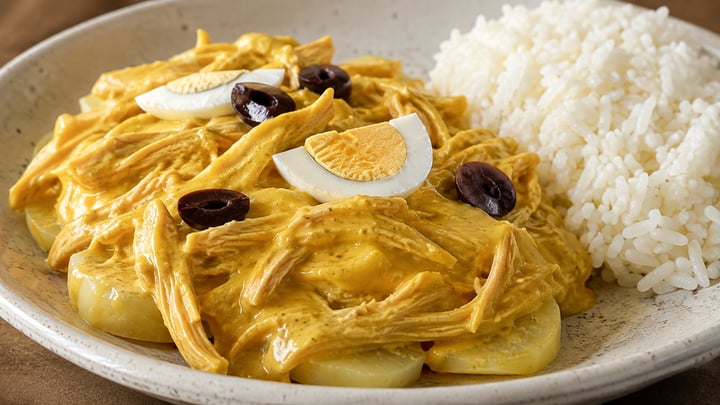
Ají amarillo is a Capsicum baccatum — a different species from bell peppers or jalapeños — and the foundation of much of Peruvian cooking: huancaína, causa and ají de gallina all come from it. What it brings is mostly colour and a fruity aroma, not heat: almost all of that sits in the seeds and the white ribs, and removing them leaves a completely different ingredient. It is called yellow but ripens orange.
It is milder than its reputation
The flesh is aromatic and barely hot. What burns are the seeds and the white ribs inside, and Peruvian cooking almost always removes them.
Once deseeded, the classic technique is to boil it twice, changing the water. After that it can be used in quantity — four tablespoons in an ají de gallina — without the dish turning hot.
That is why the name misleads: an «ají de gallina» is not a spicy dish, it is a yellow one.
What forms it comes in
Fresh: hard to find outside the Andean countries. A long pod of about ten centimetres, smooth and deep orange when ripe.
Frozen: the usual export form and the one that keeps the flavour best. Frozen whole, used straight from the freezer.
As paste: jars of processed flesh, the most practical option and what most recipes written outside Peru call for. A tablespoon of paste is roughly one fresh deseeded pod.
Dried — and here one name confuses: ají mirasol is dried ají amarillo. Same chilli, two names depending on its state. Soak in hot water before using.
What to substitute, and what you lose
There is no good substitute, and it is worth saying plainly: ají amarillo has a fruity aroma no supermarket chilli carries.
The closest approximation is yellow bell pepper for colour and body, plus a pinch of hot chilli for the edge. That gives a good, different dish — not the same one.
What does not work is paprika powder: it brings colour and not one fresh note, and the result tastes of sausage.
Growing it at home
If the nearest Latin American shop is far away, this is one of the more sensible routes: the plant does well in a large pot and the fruit freezes beautifully — one plant covers a year of cooking.
Two things to know first. Baccatum types are slow: 6 to 8 months from sowing to first harvest, with erratic germination that needs constant warmth. And the first year gives little — they are perennial where it does not freeze, and the second season is the good one.
The plant reaches a metre and a half to two metres and spreads, so it wants a 20 to 30 litre pot and a stake.
⚠️ And a point that is often confused: indoor growing needs a full-spectrum LED panel, not a UV lamp. Photosynthesis runs on visible light; UV grows nothing.
Where to find it
In Latin American shops, particularly Peruvian and Bolivian ones, and in many African and Asian grocers.
Online, the paste in a jar is the most reliably available form, and it keeps for months in the fridge once opened.
Bought frozen, it goes straight from the freezer to the pan. Bought fresh: deseed it, boil it twice, and freeze it in portions or as paste.
The recipes
Frequently asked questions
- Is ají amarillo very hot?
Milder than it looks. The heat sits in the seeds and the white ribs; deseeded and boiled twice it stays aromatic and barely hot, which is how Peruvian cooking uses it.
- What can I substitute for ají amarillo?
There is no exact substitute. The closest is yellow bell pepper for colour and body plus a pinch of hot chilli. That gives a good dish, not the same one. Paprika powder will not do: colour yes, fresh notes none.
- Is ají mirasol the same thing?
Yes: ají mirasol is dried ají amarillo. Same chilli, two names depending on its state. Soak it in hot water before use.
- Can it be grown in a pot?
Yes, and it works well: a 20 to 30 litre pot, a stake and plenty of light. But it is slow — 6 to 8 months to first harvest — and the first year gives little: the second season is the good one.
Updated on 2026-09-05T13:45:30.312Z