What is a Calahorra pepper?
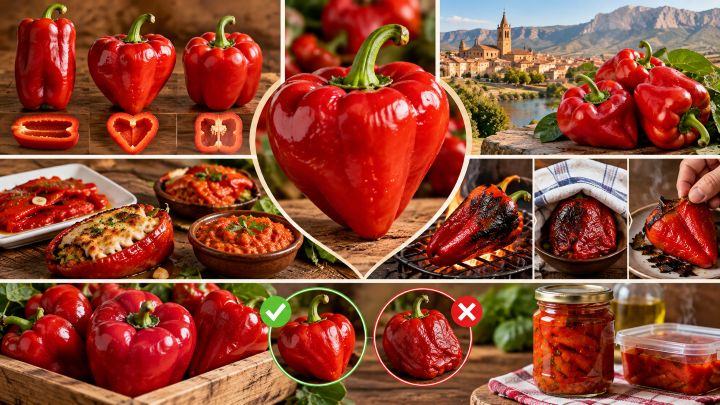
The Calahorra pepper is a heart-shaped sweet pepper: broad at the top, by the stem, and tapering to a single point. When ripe it's a deep red, with thick, meaty flesh and no heat at all. It's the classic canning pepper — the one in jars of roasted red peppers — and, thanks to those thick walls, one of the best for roasting, peeling and stuffing. It's named after Calahorra, a town in La Rioja, Spain, with a long tradition of peppers and preserves.
How to recognize it
All sweet peppers (bell peppers and their relatives) belong to the same species, Capsicum annuum. What sets them apart at the market is their shape, and each shape has its own trade name:
Calahorra: heart-shaped, with broad shoulders that narrow down to a single point. Thick walls.
Lamuyo: long and rectangular, with three or four lobes at the base.
Blocky or "California": almost as wide as it is long, with four distinct lobes. The classic bell pepper; it stands up on its own.
Like all peppers, the Calahorra starts out green and turns red as it ripens. Green, it's firmer, grassy and a little bitter; red, it's much sweeter and more aromatic.
Where the name comes from
Calahorra is a town in La Rioja, in Spain's Ebro valley, known as the city of vegetables. Peppers are one of its signature crops, and every September it holds a pepper and preserves fair, with roasting and peeling contests.
The name traveled with the seed. In Argentina, "calahorra" is the name of the trade type: the official standard describes it as a pepper whose "fruit is heart-shaped with a single point," and it's the type the canning industry uses most. That's why you'll sometimes also see it written as "pimiento de Calahorra": it's the same pepper.
What it's good for in the kitchen
Roasted and peeled. This is where it shines. The thick flesh holds up to the heat without falling apart and, once peeled, turns silky and sweet. Eat it as is, with olive oil, garlic and salt, or add it to salads, sandwiches and empanadas.
Stuffed. There's plenty of room inside, and the walls don't split in the oven. Because of its point it doesn't always stand up on its own: if it wobbles, slice a very thin sliver off the tip without piercing it, or pack the peppers snugly into a small dish.
Stewed. In sauces, stews and sofrito, use it like any sweet pepper: it adds body and sweetness. Because it's so meaty, it goes further than a thin-walled one.
In soups and purées, roasted before blending, it gives a deep red color and a sweet, almost smoky flavor.
If a recipe calls for Calahorra and you can't find it, any red bell pepper will do. If its walls are thinner, cut the oven time a little so it doesn't collapse.
How to roast and peel it
In the oven: whole, on a baking sheet, at 200–220 °C (400–425 °F) for 30 to 40 minutes, turning once or twice, until the skin is wrinkled, puffed and charred in places.
Over a flame or on the grill: straight over the fire, turning until the skin blackens all over. It's faster, and the flavor ends up smokier.
Resting is what makes them peel themselves. Straight off the heat, put them in a covered bowl or a closed bag for 10 to 15 minutes: the steam loosens the skin.
Peel them by hand, without running them under water. Rinsing washes away the juices and much of the flavor. If a few bits of charred skin stick, wipe them off with a paper towel. Save the juices they release: they're gold for dressing them.
Only then open them up and remove the stem, seeds and white ribs.
How to choose and store it
When buying: it should be firm, with taut, glossy skin, no soft spots or wrinkles, and feel heavy for its size. The stem should be green and fresh, not dried out or dark.
Raw: whole and unwashed, in the crisper drawer of the fridge, it keeps for about a week. Cut, two or three days in a sealed container.
Roasted and peeled: in a jar, covered with its juices and olive oil, it keeps four or five days in the fridge.
In the freezer: roasted and peeled, it freezes very well in portions for up to six months. Raw strips can be frozen too, but they turn soft when thawed: fine for cooking, not for eating raw.
Where to buy it
At greengrocers and markets, especially in season, from late spring to autumn. It's often sold simply as a "red pepper": you'll know it by its heart shape and single point.
Out of season, the option is preserved peppers: roasted peppers in jars or cans, many of which are this type.
The recipes
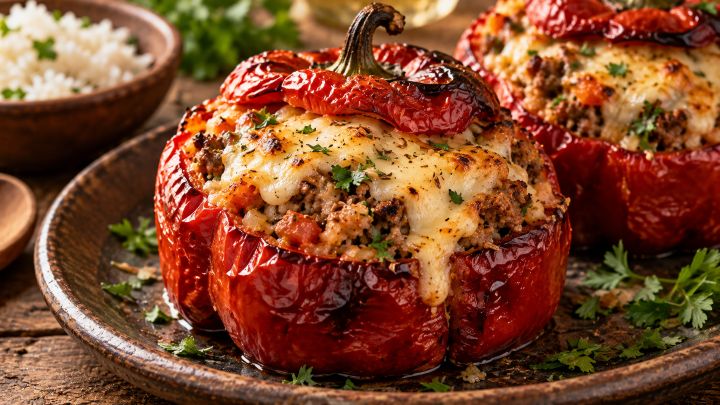 Calahorra Peppers Stuffed with Meat and Gratin Mozzarella
The recipe that makes the most of its shape: stuffed with spiced meat, topped with its little lid and gratin mozzarella.
 Creamy Roasted Red Pepper and Onion Soup
Oven-roasted peppers blended into soup: the easiest way to taste their concentrated sweetness.
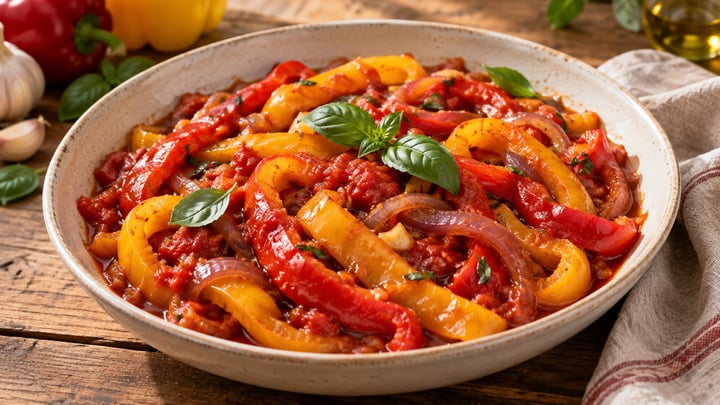 Peperonata: Italian Stewed Bell Peppers
Slowly stewed with onion and tomato: a meaty Calahorra goes even further than a thin-walled pepper.
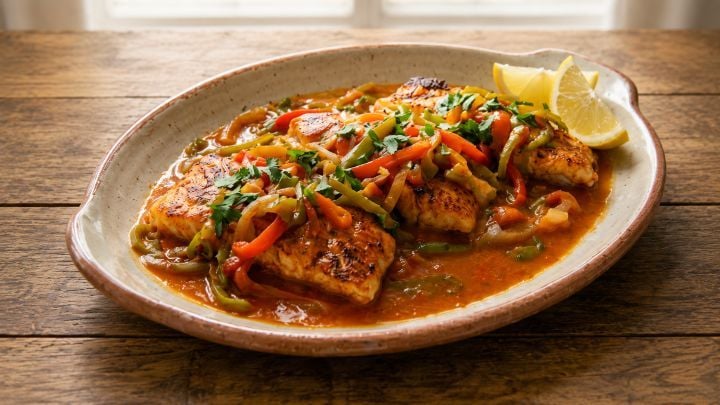 Paprika Fish Fillets with Bell Pepper Sauce
In a quick sauce for fish, red and green: a way to taste the difference between a ripe pepper and an unripe one.
Frequently asked questions
- Is a Calahorra pepper the same as a bell pepper?
It's a type of sweet pepper, closely related. The Calahorra is the heart-shaped one, with a single point and thick flesh, unlike the long Lamuyo or the square bell pepper.
- Is the Calahorra pepper spicy?
No. It's a sweet variety with no heat, whether green or red. Red and fully ripe, it's even sweeter.
- What can I use if I can't find it?
Any red bell pepper. For stuffing, the square ones stand up better; for roasting and peeling, choose the ones with the thickest walls. If they're thinner, shorten the oven time a little.
- Do you need to pre-cook peppers before stuffing them?
It depends on the filling. If the filling is already almost cooked, as in the meat-stuffed Calahorra peppers, they go straight into the oven for 20 to 25 minutes. If the filling is raw or needs longer, bake the empty peppers for about 10 minutes first.
- Are jarred roasted peppers Calahorra peppers?
Often, yes: the Calahorra is the type the canning industry uses most. The label doesn't always say so, but the heart shape and thick flesh usually give it away.
Updated on 2026-09-30