What is cassava flour?
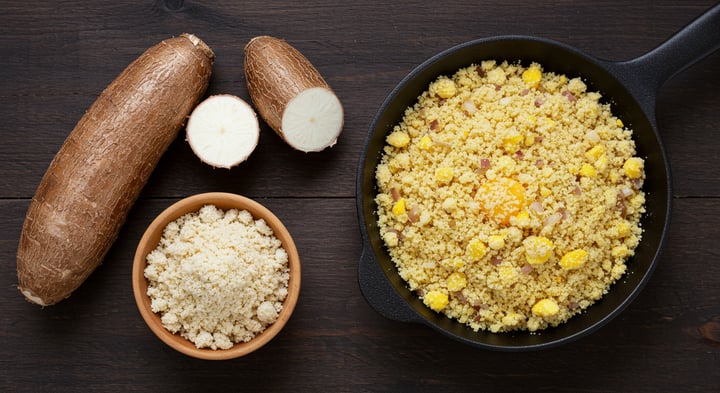
Cassava flour (farinha de mandioca) is cassava root grated, pressed to remove the liquid and dried with heat, with its fibre included. It is granular and cream-coloured, and it is the base of Brazilian farofa. It comes raw (to toast at home) or already toasted.
Cassava flour and tapioca: same tuber, opposite products
Tapioca (or cassava starch) is only the starch that settles out of the pressed liquid: pure, white, fibre-free.
Heated, they do opposite things. The flour toasts and stays crisp and loose — which is exactly the point of farofa. Tapioca gelatinises: it turns translucent, sticky and elastic, which is what makes it work in pão de queijo and in bubble tea pearls.
Put tapioca in a farofa and instead of crisp grains you get a gummy paste.
Where to find it
Brazilian and Latin American grocers stock it as farinha de mandioca, usually labelled crua (raw) or torrada (toasted).
⚠️ Do not buy anything labelled starch, flour starch or tapioca flour: that is the starch, and it turns gummy instead of crisp. Some Western brands also sell a fine, white «cassava flour» aimed at gluten-free baking — that one is milled differently and will not give you farofa either.
The recipe
Frequently asked questions
- Can I use tapioca instead of cassava flour?
No. Tapioca is pure starch and turns gummy and translucent when heated, the opposite of the crisp point farofa is after.
- Raw or toasted?
Both work for farofa, because the recipe toasts it in butter anyway. With the raw kind, toast a few minutes longer, until it smells nutty.
- Is it the same as fariña?
Yes, that is the name used in the Argentine littoral and in Paraguay for the same product.
Updated on 2026-10-02