What is charqui?
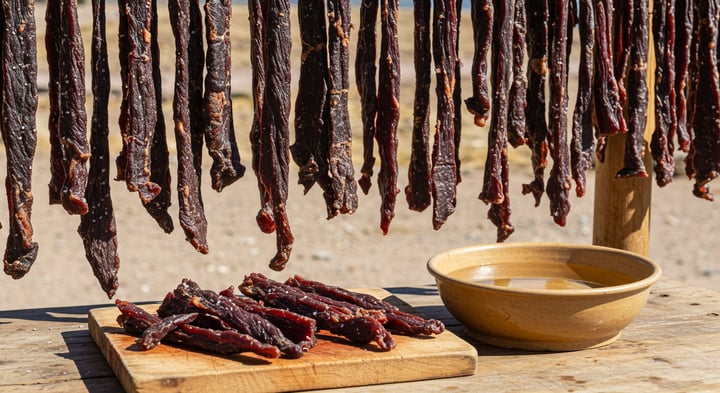
Charqui is meat cut into thin strips, covered in salt and dried in the sun and the cold air of the highlands. The salt draws out the water and the air finishes the job: with no refrigeration, the meat stays stable for months. It is an Andean technique that predates the conquest — the word comes from the Quechua charki — and it was made with llama or alpaca before it was made with beef. From it, by way of English, came jerky.
It has to be desalted before cooking
Charqui arrives very salty: that salt is what preserves it, and if it goes straight into the pot the dish is inedible. Soak it in cold water for 8 to 12 hours, changing the water three or four times.
The shortcut is to boil it for a few minutes and throw that first water away; you lose some flavour but you gain time. Many northern recipes do both: a short soak and one discarded boil.
After that it is shredded or crushed: the meat is dry, so in a stew it falls apart on its own and releases a concentrated flavour that fresh meat does not have.
Practical rule: salt the dish only at the end, and taste first. Charqui keeps releasing salt as it cooks.
Charqui, charque, carne seca and carne de sol
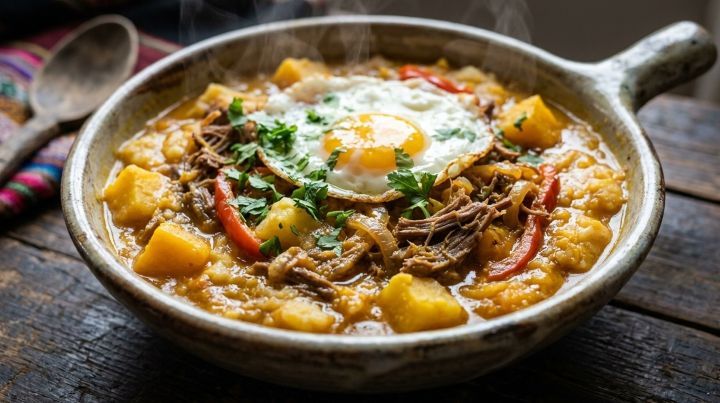
Charqui is the Andean name: north-western Argentina, Bolivia, Peru and Chile, where it is the base of charquican.
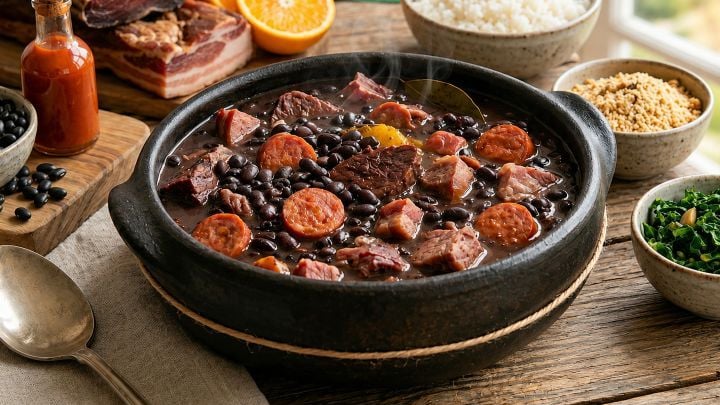
In Brazil, the same product is charque (also called jaba): very salty and sun-dried over days, in thick slabs. It is the one that goes into feijoada.
Carne de sol from north-eastern Brazil is not the same thing, though the two get confused constantly: it takes far less salt and is dried briefly and in the shade. It is more tender, keeps considerably less well and does not need as much desalting.
In Mexico, cecina and machaca are cousins of the same idea, with other cuts and other drying.
Where to find it
Brazilian grocers are the easiest route outside Latin America: ask for carne seca or charque, which is exactly the same product. Peruvian and Bolivian shops stock it under charqui.
⚠️ Do not substitute supermarket beef jerky or biltong: jerky is sweetened and seasoned, and biltong is vinegar-cured and meant to be eaten as it is. Neither rehydrates into a stew the way charqui does.
With none of them available, heavily salting brisket or flank for a couple of days in the refrigerator gets you part of the way, though the concentrated flavour of the drying does not come with it.
The recipes
Frequently asked questions
- Will supermarket beef jerky do?
No. Jerky comes seasoned and almost always sweetened, and it is meant to be eaten as a snack, not rehydrated in a stew. In a pot it brings sugar and spices that do not belong.
- How long does it need desalting?
Eight to twelve hours in cold water, changing the water three or four times. If you are in a hurry, a few minutes at a boil with the water discarded takes care of most of it.
- Can charqui be made at home?
It can, but it needs conditions: thin strips, plenty of salt and a dry, airy, cool environment for several days. In a humid climate it is risky and buying it ready-made is wiser.
Updated on 2026-10-02