What is humita?
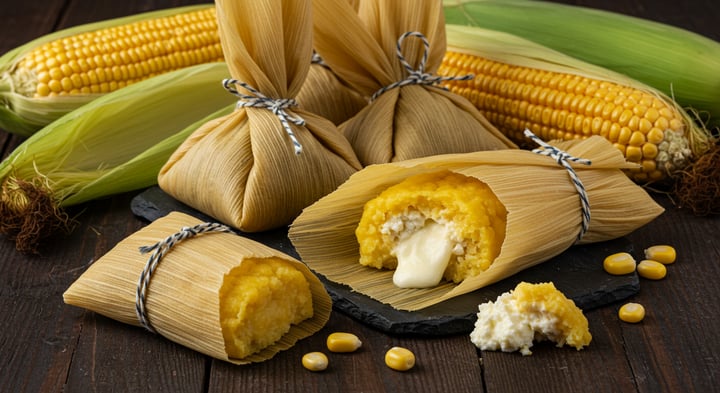
Humita is made from grated fresh corn, seasoned with a base of onion and bell pepper and cooked until it becomes a thick, savoury cream. It is typical of north-western Argentina and of the whole Andean region — Bolivia, Peru, Chile and Ecuador — and it comes in two forms: wrapped in the corn husk itself and steamed, or made straight in the pot as a savoury cream. The name comes from the Quechua "humint'a", and the dish predates the arrival of the Spanish.
Humita and tamal are not the same thing
This is the most common mix-up, and the difference is simple: humita is made with grated fresh corn; a tamal, with dried corn dough (corn flour) that has been rehydrated.
A tamal also has a filling — beef, chicken, an olive — inside a dough that works as a wrapper. Humita has no filling: the corn is the whole dish. When it has cheese, the cheese sits in the middle of the mixture, not as a separate filling.
In short: if you bit into it and found meat, it was a tamal. If it was corn from start to finish, it was humita.
The two forms: in the husk and in the pot
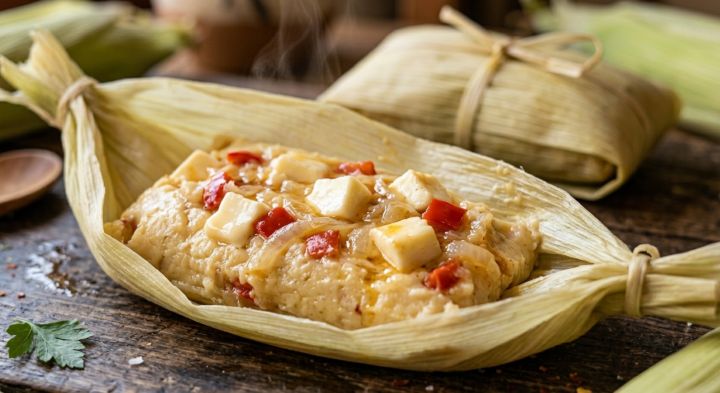
Humita en chala: the mixture is placed on the corn husks themselves, which are folded and tied into a little parcel and steamed or boiled. This is the festive version, and the one sold on the streets in the north.
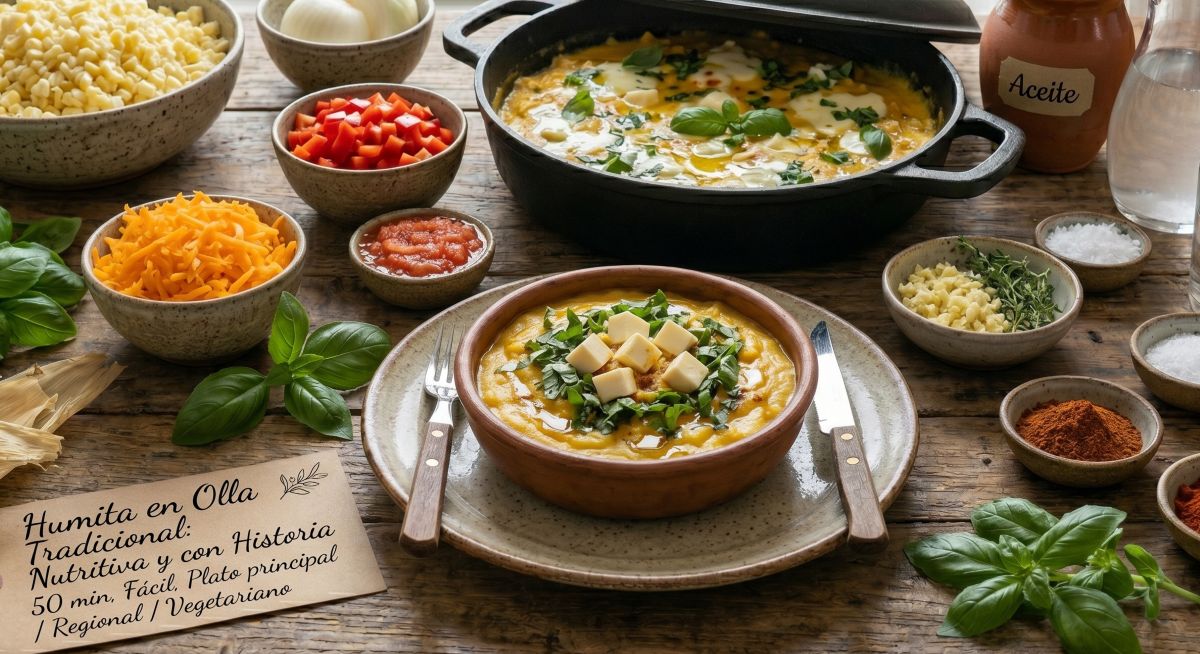
Humita en olla: the same mixture cooked straight in the pot, stirring, until it becomes a thick cream you eat with a spoon. This is the everyday version, quicker, and it usually takes squash for body and colour.
Where it is from and when it is eaten
Humita is typical of Salta, Jujuy and Tucumán, and belongs to the same family of Andean dishes eaten in Bolivia, Peru, Chile and Ecuador.
It is summer food, because it depends on tender corn: out of season the kernels go hard and the mixture loses its creaminess. In northern homes it shows up alongside empanadas and locro on the patriotic dates and at family celebrations.
The recipes
Frequently asked questions
- Is humita sweet or savoury?
Savoury, almost always. It takes a base of onion and bell pepper, paprika and often fresh cheese. A sweet version with sugar in the mixture does exist, but it is the minority.
- What is the difference between humita and tamal?
Humita is made with grated fresh corn and has no filling. A tamal is made with dried corn dough and does have a filling, usually beef or chicken.
- Can humita be made with canned or frozen corn?
It can, but the result changes: canned corn has less starch and more water, so the mixture comes out less creamy and usually needs a little corn flour or more time on the heat to take body.
- What is humita salteña?
It is humita in the style of Salta: wrapped in the corn husk and steamed, with a base of onion and bell pepper and cheese in the middle of the mixture.
Updated on 2026-10-02