What is quesillo?
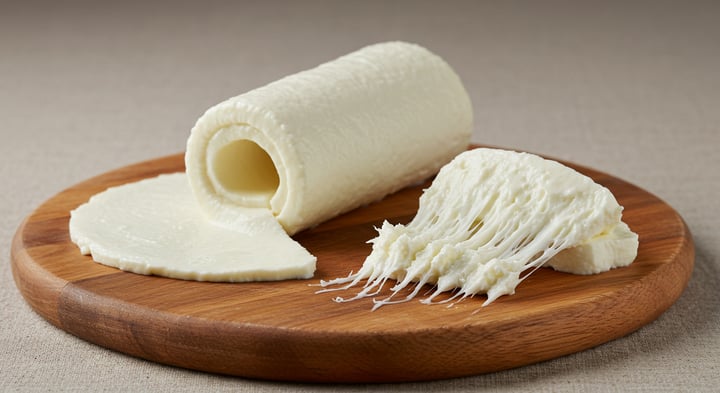
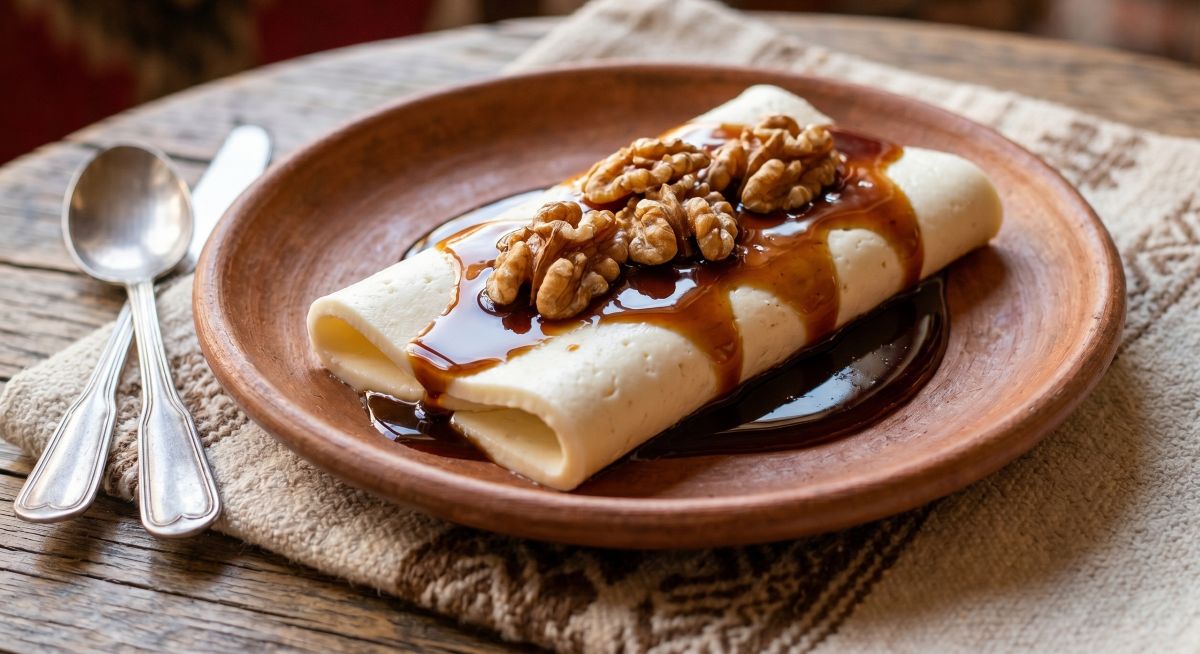
Quesillo is a fresh stretched-curd cheese: the curd is pulled and worked in hot whey until it turns elastic, then flattened into a round sheet that is rolled up like a swiss roll. It is the table cheese of north-western Argentina — Salta, Jujuy, Tucumán, Santiago del Estero — faintly acidic and salty, eaten as it is, with cane syrup, or inside tamales and humitas. The word, though, does not mean the same thing everywhere: in Venezuela a quesillo is a dessert, and in Mexico it is Oaxaca cheese.
Stretched curd: why it pulls
The milk is curdled and left to acidify until the curd reaches a point where, submerged in hot water or whey, it stretches into strands instead of breaking. That is when it is worked, pulled and flattened. It is the same technical family as mozzarella and Mexican Oaxaca cheese.
That fibrous texture is what you feel when you bite it: quesillo does not crumble like a soft cheese or break up like a semi-hard one, it separates into sheets.
It is a fresh cheese: no ageing. It keeps for days in the refrigerator, not months, which is why it is hard to find in good condition outside the north.
One word, five different things
In north-western Argentina and southern Bolivia it is this stretched-curd cheese in a rolled sheet.
In Venezuela a quesillo has no cheese in it at all: it is a dessert of condensed milk and egg with caramel, close to a flan, with its little holes as the house signature.
In Mexico, quesillo is simply the name of Oaxaca cheese: the same stretched-curd technique, but wound into a ball.
In Nicaragua it is street food: a tortilla with soft cheese, pickled onion and cream. And in the Colombian Tolima, a fresh cheese wrapped in bijao leaf.
Where to find it
Outside the region it is essentially unavailable fresh: it does not travel, and it is not aged. Do not go looking for it under this name in a supermarket.
Oaxaca cheese is the practical answer wherever there is a Mexican grocer — same technique, same behaviour, wound into a ball rather than rolled into a sheet.
Failing that, fresh mozzarella with light salting is the closest and the most accessible. Avoid the low-moisture pizza kind if the cheese is going to be eaten cold.
The recipe
Frequently asked questions
- What can quesillo be replaced with?
The closest is fresh, lightly salted mozzarella, because it shares the stretched-curd technique. If you can find Mexican Oaxaca cheese, that is practically the same cheese in another shape. Ordinary pizza mozzarella works in cooked dishes, but it is more elastic and less acidic.
- Does quesillo melt?
It softens and stretches, which is exactly what you want inside a tamal or a humita. Being fresh, it releases less fat than an aged mozzarella, so it does not split into oil.
- How long does it keep?
It is a fresh cheese: a few days in the refrigerator, wrapped so it does not dry out. It is not a keeping cheese and it does not improve with time.
Updated on 2026-10-02