What is watercress?
Watercress is a green leaf that tastes peppery, not bitter: it belongs to the brassicas, the family of mustard and radish, and that tingle it leaves at the back of the palate works on the same principle. It gets confused all the time with chicory greens, which are bitter: two plants from different families and two different flavours. There are also two cresses sold under similar names — water cress and land cress — and they are not the same plant.
Watercress and garden cress: not the same plant
Watercress (Nasturtium officinale) grows with its roots in running water. You know it by the hollow, juicy stems and the rounded leaves, almost like coins, arranged in pairs along the stem. It is the more peppery of the two.
Garden cress (Lepidium sativum) grows in soil like any other leafy vegetable, germinates in days and has much smaller, more divided leaves. It is the one sold as a microgreen and the one children grow on damp cotton wool.
For cooking, the practical difference is texture: watercress brings a crisp, juicy stem, garden cress is all leaf and wilts at once.
A sprig of watercress puts out roots in a glass of water within days, with no soil and no pot. It is worth not overdoing it there: in plain water it roots and holds on for a while, but it is living off its own reserves. To keep producing leaves it needs nutrients: move it to a pot with soil that never dries out — standing in a saucer of water — or give it a very diluted liquid feed. Without that, within weeks the leaves come out smaller and paler and the stem stretches.
The leaf changes shape: it is the same plant
Anyone who grows it gets a surprise: the leaves on their plant do not look like the ones in the bunch. It is not a different species, it is the same one in a different phase.
Lying flat in running water, cool and well fed, watercress grows as a mat and makes simple, round leaves like coins. That is the form you see in a stream, in a hydroponic tray and in the bunch at the greengrocer: tender, plentiful leaf — which is exactly the part you eat.
In a pot, with less water, more warmth or longer days, the stem stretches upwards and the leaf turns pinnate: one large leaflet at the tip and pairs of smaller ones along the sides. That does not mean it stopped growing — it means it started preparing to flower.
How to bring it back: cut the stretched stems back to 5 to 8 cm, keep it in half shade with water always in the saucer underneath, and pinch out the flower buds as soon as they appear. The cuttings you take root in water within days, so you get new plants out of it as well.
How to tell it apart at the greengrocer
Watercress: small, rounded leaves, thick juicy stem, peppery flavour.
Chicory greens: long, toothed leaves, a duller green, bitter flavour. It is chicory, related to radicchio and endive, not to watercress.
Rocket (arugula): also a brassica and therefore the closest in flavour, but the leaf is long and lobed and the taste leans nutty rather than peppery.
Short rule: if the leaf is round and it bites, it is watercress; if it is long, toothed and bitter, it is chicory.
Why it comes top of the nutrient-density lists
In 2014 a study published by the CDC ranked 41 fruits and vegetables by nutrient density — how many nutrients each provides relative to its calories — and watercress came first, with the maximum score.
The small print matters and almost nobody mentions it: the ranking is per calorie, and watercress is almost all water. It wins largely because it weighs so little in calories, not because a plate of watercress delivers more nutrients than a plate of spinach. A whole bunch cooks down to nothing.
Concretely, it is very high in vitamin K and provides vitamin C, beta-carotene and a fair amount of calcium for a leaf. Since it is mostly eaten raw, that arrives intact: a short blanch loses little, but a long boil takes some of the vitamin C into the water.
Heat takes the pepper out
The heat in watercress appears when the leaf is cut or chewed: only then are the mustard compounds released. That is why it is intense raw and turns mild, almost sweet, when cooked.
From that comes a useful rule for substituting it in any cooked-greens recipe: a short blanch — 30 to 60 seconds in boiling water, then squeezed well dry — takes the edge off without turning it into a rag.
Overcooking it is a waste: you lose the crisp stem, which is half the point.
Not from the stream
Wild watercress gathered from streams or irrigation ditches can carry parasites from livestock grazing near the water, which is why wild watercress is not eaten raw. It is a known and documented risk in the Andean region — and the same warning applies to wild watercress in Europe and North America, where liver fluke is the usual concern.
The greengrocer kind, cultivated or hydroponic, does not have that problem: wash it like any other leafy green and eat it raw without a second thought.
Where to find it
In the UK it is a supermarket staple, sold in bags and in bunches, and it is grown commercially in the chalk streams of Hampshire and Dorset. In the US it is easier to find in bunches at greengrocers and farmers markets than in the salad aisle.
Its best season is cool weather: spring and autumn. In high summer it flowers and the leaves turn tougher and more peppery.
When choosing it, look at the stem: firm, with no soft or yellowing parts. Keep it like a bouquet, stems in a little water with a bag over the top.
The recipes
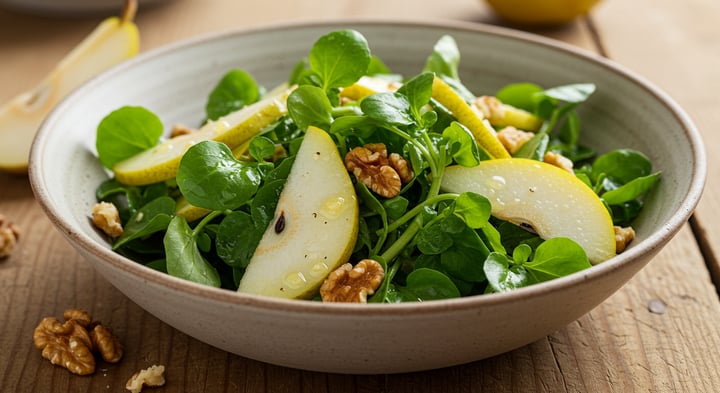 Watercress Salad with Pear and Walnuts
Watercress raw and in the lead, with the pear and walnuts that balance the pepper.
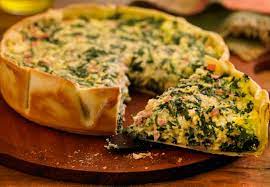 Spinach Quiche
And to try it cooked: replace 30% of the spinach with lightly blanched watercress. It adds a peppery note without taking over.
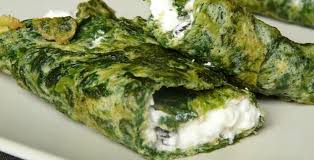 Spinach and Cheese Crêpes
It works here, but not on its own: mix one part watercress with the spinach or the rocket. By itself it gets too peppery for a filling.
Frequently asked questions
- Is watercress the same as chicory greens?
No, and they are not even related. Watercress is a brassica (the mustard family) and is peppery; chicory greens are bitter. They also look different: watercress has a rounded leaf, chicory a long, toothed one.
- Is it eaten raw or cooked?
Both. Raw it keeps the pepper and the crisp stem, ideal in a salad. Cooked it softens a great deal and works in tarts, soups and fillings, where it replaces spinach and brings more character.
- Can watercress be grown at home?
Rooting it is very easy: a sprig from the bunch in a glass of water puts out roots in days, and changing the water every two or three days keeps it looking well for a good while. Keeping it producing is another matter: plain water has nothing to feed it with. To harvest leaves from it, move it to a pot with soil that is always damp, standing in a saucer of water, or give it a well-diluted liquid feed.
- What can it be replaced with?
Rocket (arugula) is the closest, because it is in the same family. For cooking, spinach replaces the texture but not the pepper; the other way round, watercress can replace spinach and give a recipe some character.
Updated on 2026-10-02