Dulce de Leche Flan – Argentine Caramel Custard
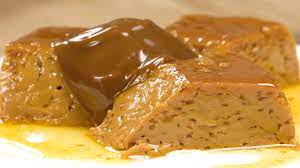
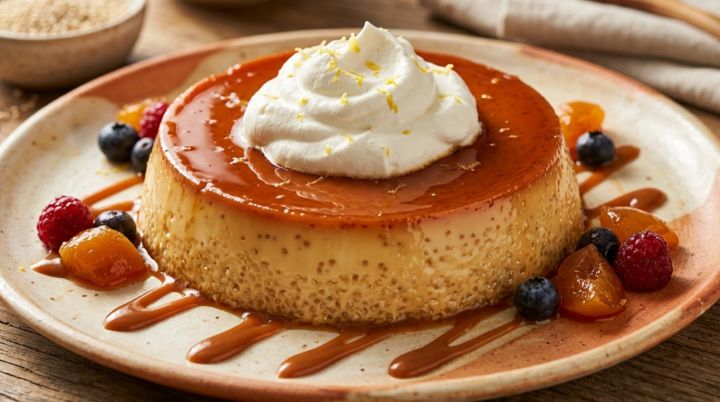
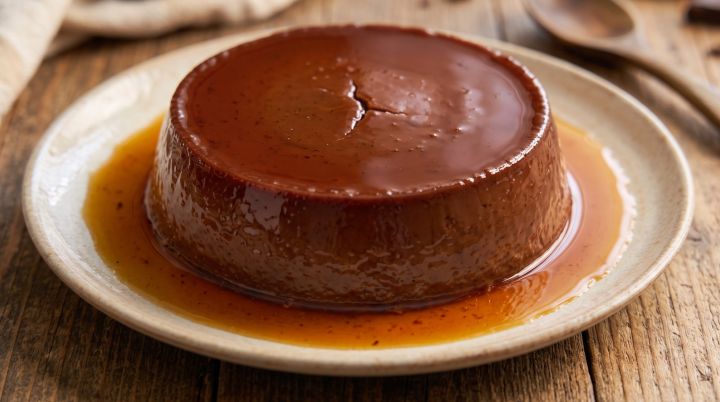
The Argentine classic at its richest: dulce de leche stirred into the custard gives the flan a deeper color and a fuller flavor than the plain version, with the slightly bitter caramel in the base to balance the sweetness.
Two moves decide the result and neither takes a minute. The dulce de leche dissolves in warm milk, never cold — in cold milk it stays in threads and the flan comes out streaky. And the mixture is stirred, not whipped: every bubble you beat in becomes a hole.
If you want to make it from scratch, there is a recipe for homemade dulce de leche.
Where to find dulce de leche. In Argentina it is in every supermarket; almost nowhere else is that true. Three routes: ready-made in a jar from a Latin American grocer or online (Havanna and San Ignacio are the usual brands); the caramelised condensed milk sold in Eastern European shops, where it is known as varyonaya sgushchyonka; or made at home. The shortcut: simmer an unopened tin of sweetened condensed milk in a water bath for two to three hours. ⚠️ It has to be sweetened condensed milk, not evaporated milk — the tin from the coffee aisle carries no sugar and will not caramelise. Keep the tin fully covered with water the whole time, and do not open it until it has cooled completely.
🔎 What is dulce de leche? — where it comes from, what goes in it and how it differs.
🔎 What is condensed milk? — where it comes from, what goes in it and how it differs.
Ingredients
- 150 g sugar (for the caramel)
- 50 ml water (for the caramel)
- 500 ml whole milk
- 220 g dulce de leche
- 50 g sugar (for the custard)
- 3 eggs
- 3 egg yolks
Method
- 1
Caramel: make a caramel with the 150 g of sugar and the 50 ml of water in a small saucepan. When it turns an even amber, remove it from the heat.
For a more complete guide to making caramel, read this tip.
- 2
Pour the hot caramel into a 20-22 cm flan mold (or eight small ones) and coat the base by tilting it. Hold the mold with a kitchen towel (tea towel): it heats up instantly.
- 3
Heat the milk with the dulce de leche, whisking until it dissolves completely, without letting it boil. This is the step that makes the flan smooth: in cold milk the dulce de leche does not dissolve and stays in threads.
- 4
Mix the 3 eggs, the 3 yolks and the 50 g of sugar just until combined. Do not beat to a foam: every bubble you fold in ends up as a hole in the flan.
- 5
Tempering: pour the warm milk over the eggs in a thin stream, stirring the whole time — never the other way around, and never all at once. That way the eggs get used to the heat instead of scrambling.
- 6
Pass the mixture through a fine strainer. What stays behind is exactly what would make it grainy: strands of egg white and undissolved dulce de leche. Skim the foam off the surface with a spoon.
- 7
Pour into the caramel-lined mold, cover with foil and set it in a deep roasting pan with hot water halfway up the mold. Bake at 160 °C: about 35 minutes for small molds, 55-65 for a large one.
- 8
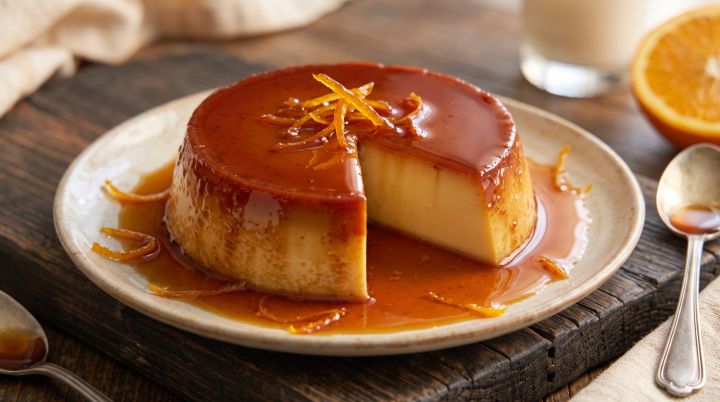
Doneness: the edge is firm and the center still wobbles slightly when you move the mold. Do not wait for the center to set. The flan finishes cooking as it cools, and overbaked it fills with holes.
- 9
Let it cool completely on the counter, then refrigerate for at least 6 hours, overnight if you can. Only then does the caramel release from the base and turn liquid again.
- 10
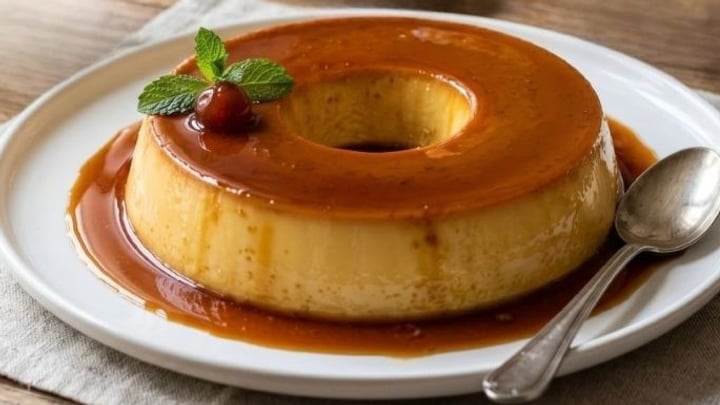
To unmold: run a thin knife around the edge, set a rimmed plate on top and flip the mold over in one motion. Wait a few seconds for all the caramel to run down before lifting it off.
Flan Every Which Way
Who said flan always has to taste the same? Here we show how versatile the homemade caramel custard is, with ingredients that turn a simple dessert into something surprising. One technical principle, many versions — find your favorite.