Patagonian Lamb Cacciatore
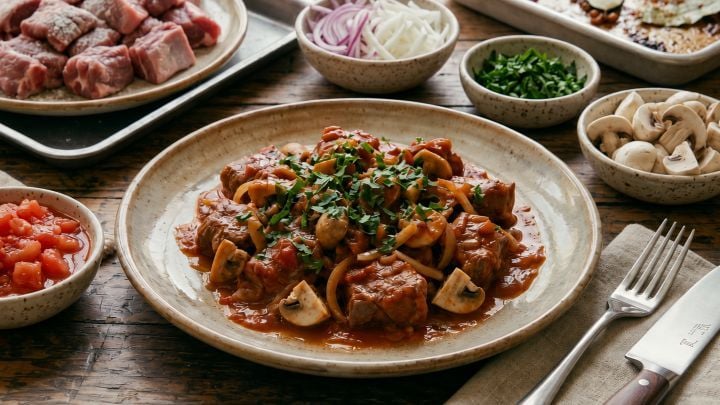
A refined reading of mountain cooking, built on the exceptional quality of lamb from the far south of the Americas — known worldwide for its lean, intense flavor.
Searing hard and then braising slowly in white wine with fresh mushrooms gives a velvety sauce that balances the power of the lamb against the delicacy of the herbs.
Shake off the excess flour before searing. Loose flour burns in the hot oil and turns the sauce muddy instead of building a clean crust.
And the mushrooms are browned separately and added at the end. Cooked in the pot from the start they release their water into the sauce and never take any color.
Ingredients
- 1.5 kg lamb, cut into small pieces
- 1 cup all-purpose flour (plain flour)
- 2 onions, finely sliced
- 7 plum tomatoes, peeled, seeded and cubed
- 200 g fresh mushrooms, quartered
- 150 ml white wine
- 100 ml olive oil
- 3 garlic cloves, sliced
- 1 bay leaf
- Salt, pepper, chopped parsley and chopped basil, to taste
Method
- 1
Cut the lamb into even, small pieces. Turn them in flour, shaking off the excess so the searing stays clean — loose flour burns and muddies the sauce.
- 2
Searing: in a pot or a flat iron pan with the olive oil very hot, brown the lamb pieces until they have an even crust. Set them aside.
- 3
In the same pot, add the onions, the tomatoes, the garlic and the bay leaf. Season to taste.
- 4
Deglaze and braise: pour in the white wine and cook over low heat for 20 minutes, stirring occasionally to lift the browned bits from the bottom.
- 5
The mushrooms go separately: brown them in a pan with a little oil until firm and colored, then add them to the main pot. Cooked in the sauce from the start they would just release water.
- 6
Cook everything together for 10 minutes more so the flavors combine. Before serving, scatter over the chopped parsley and fresh basil.
Frequently asked questions
Which wine goes best with this dish?
For a regional match, a Pinot Noir from Patagonia is the ideal choice: its acidity and fruit complement the intensity of the lamb without covering it. If you prefer a fuller-bodied red, a young Malbec works beautifully.
And if you would rather stay with the line of the white wine used in the braise, an oaked Chardonnay is a good ally.
Does it strictly have to be lamb?
Lamb is the soul of this recipe, but it can be adapted. The closest substitute is kid goat.
For a more urban version, cuts of beef that stand up to slow cooking also work — shin (osso buco) or shank. The result is good, but the flavour shifts towards classic European braising.
What makes Patagonian lamb special?
Two things: feed and exercise. The animals grow up across enormous stretches of arid country, walk long distances and graze on natural pasture and aromatic scrub. That gives much leaner meat, with a firm texture and a distinctive wild flavour; it carries a protected geographical indication.
Outside Argentina, Patagonian lamb is hard to find. The closest thing is grass-fed lamb from New Zealand, Wales or the salt marshes: also lean and firm, because the animals move. What does not work here is very young, heavily marbled milk-fed lamb — it falls apart in the braise.
What should I bear in mind if the lamb is frozen?
The key is slow thawing: move the meat from the freezer to the fridge 24 hours before you cook it.
And one note that decides the whole dish: before flouring the pieces, pat them very thoroughly dry with kitchen paper. If the meat goes into the pot wet, it boils instead of browning — and then you lose exactly the crust the flavour comes from.
Can I use other kinds of mushroom?
Fresh button mushrooms or portobellos are best: they keep their firm texture after browning.
For a deeper, woodland flavour, soak a handful of dried wild mushrooms and add them — in Patagonia they use hongos de pino, which grow in the pine forests of the Andes; porcini or other dried boletes are the closest equivalent.
What not to use: tinned mushrooms. Their texture is too soft and the brine makes them too acidic, which masks the delicacy of the lamb.
What if the lamb is still tough after 45 minutes?
The timing is calculated for small pieces, and how tough the meat is also depends on the age of the animal.
If it is not tender when you taste it, simply add a splash more stock or water and braise over very low heat for another 15 to 20 minutes. Lamb is a forgiving meat: given time and liquid, it always gives in the end.
Argentine Classics: Tradition with Identity
Nothing beats the taste of home. These are the recipes that belong to Argentina's culinary history: from a properly made locro to the tricks behind empanadas with hand-cut beef that fall apart in your mouth. It is not only about dishes but about techniques, family stories and the legacy of criollo cooking — each recipe close to the tradition, but written with the precision that makes it work every time.