Locro de Trigo – Wheat Stew from Tucumán
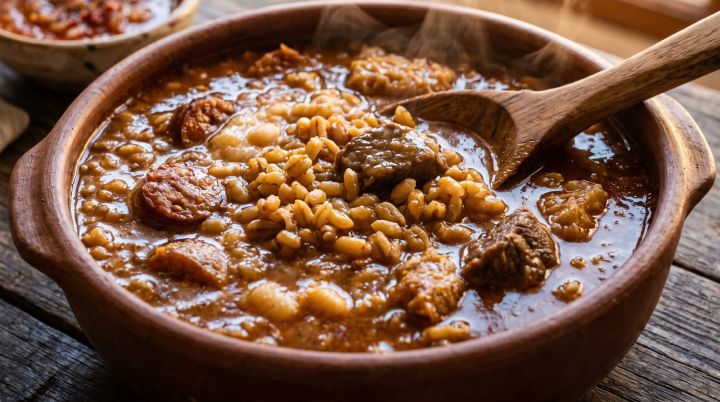
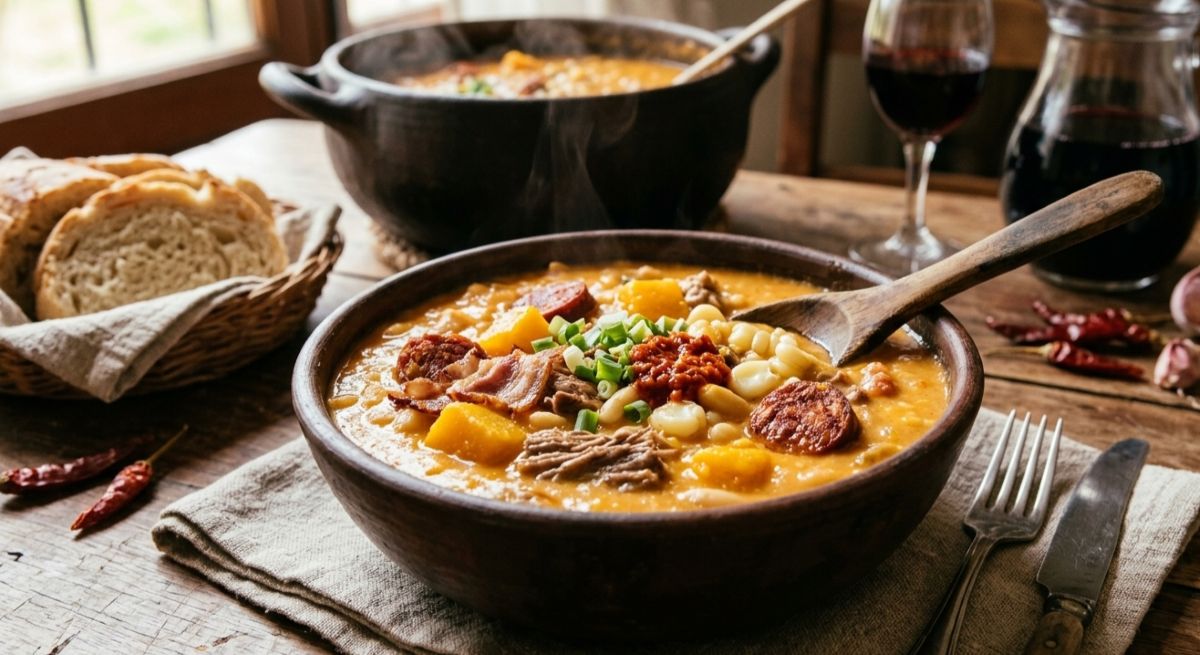
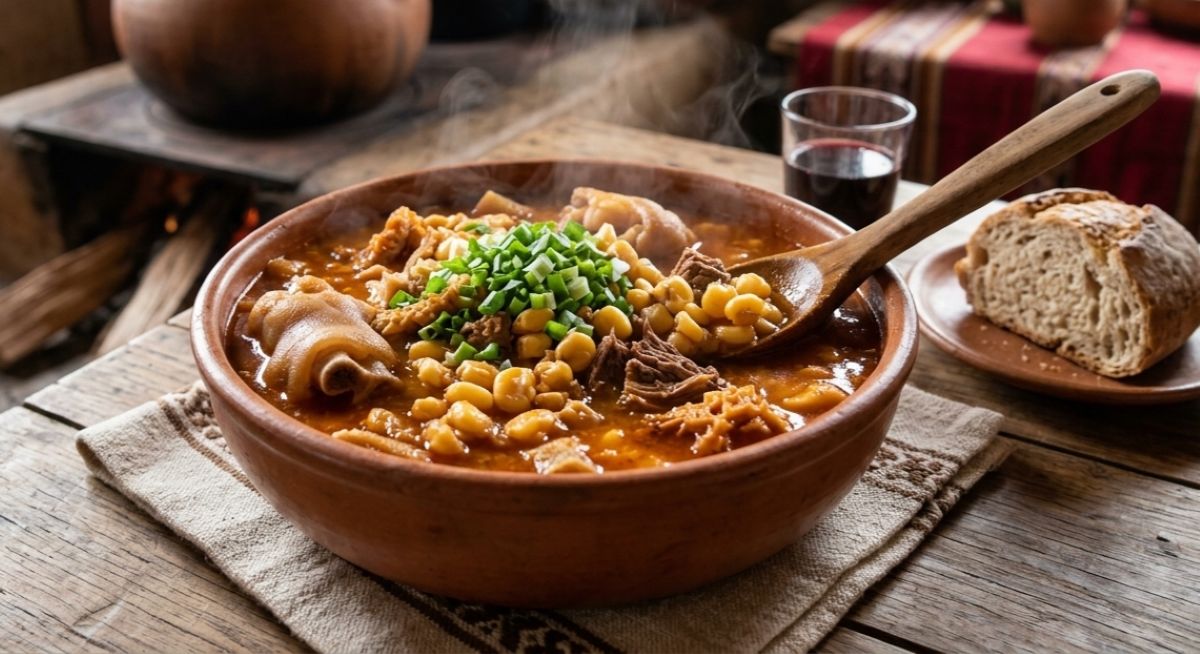
A stew with centuries of history. Instead of corn it uses hulled wheat, which bursts open as it cooks slowly, with white beans crushed to a purée for the creaminess.
The wheat is topped up with water two cups at a time, as it drinks, until the grains burst. Adding it all at once drowns the starch and you get soup rather than the thick texture that makes a locro.
And the salsa tucumana — onion, red chili and paprika in fat — is not stirred in by the cook. It goes to the table separately, so each person adds as much heat as they want.
The corn version is the locro criollo.
🔎 What is chorizo? — where it comes from, what goes in it and how it differs.
Ingredients
- 500 g hulled wheat
- 1 kg beef topside, in pieces
- 2 criollo sausages
- 250 g white beans, cooked in advance and crushed to a purée
- 500 g pork bones
- Beef tripe, cut into pieces
- Fresh pork belly, to taste
- 1 red chili (for the sauce)
- 1 large onion (for the sauce)
- 3.5 l water (for the sauce)
- Paprika (for the sauce)
- Salt and pepper (for the sauce)
Method
- 1
Put the hulled wheat in a pot with water and cook it over low heat. As it comes to the boil, add water two cups at a time, keeping that up until the grains burst open.
- 2
Add the topside in pieces, the well-washed pork bones, the tripe cut into pieces and a whole piece of pork belly.
- 3
Add the white beans, already cooked and crushed to a purée, which is what gives the stew its body.
- 4
The sauce: in a pan, put the fat and the chopped onion and cook until translucent, without letting it brown. Add the chopped red chili and cook, stirring continuously.
- 5
Stir a tablespoon of paprika, salt and pepper into the sauce. It can go into the pot or, better, to the table separately — that way each person regulates the heat on their own plate.
Argentine Classics: Tradition with Identity
Nothing beats the taste of home. These are the recipes that belong to Argentina's culinary history: from a properly made locro to the tricks behind empanadas with hand-cut beef that fall apart in your mouth. It is not only about dishes but about techniques, family stories and the legacy of criollo cooking — each recipe close to the tradition, but written with the precision that makes it work every time.