Locro – Argentina's National Stew
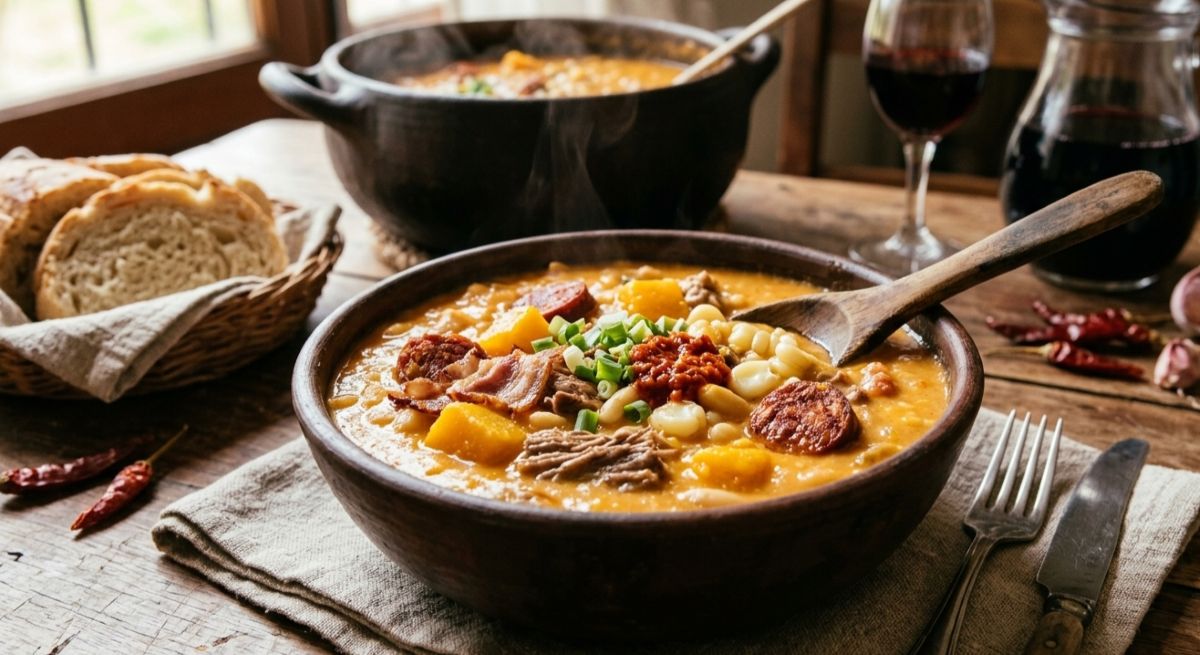
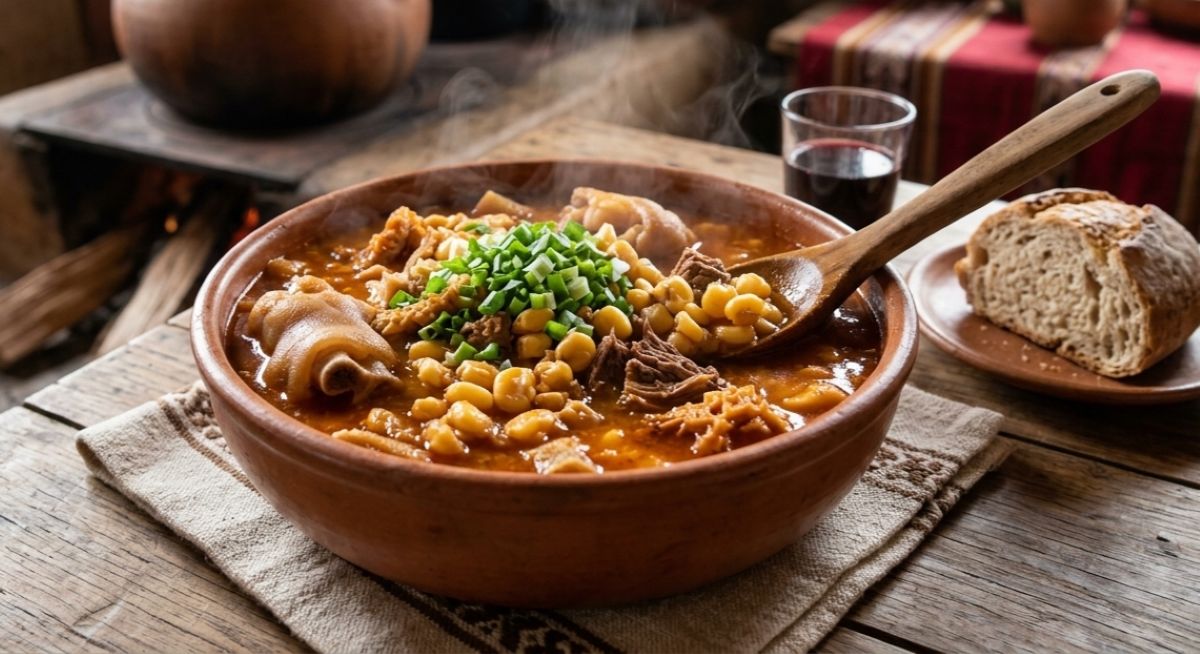
The most representative dish of Argentina's Andean cooking, with pre-Hispanic roots reaching back centuries. Cracked white corn, lima beans and several cuts of meat melting together over long, uninterrupted cooking.
The squash is the thickener, and it is meant to disappear. Cook it until it dissolves completely — that is what gives locro its body. Anyone fishing out cubes of squash at the end has taken it off too early.
The corn and the beans soak separately for 24 hours, and the soaking water is thrown away. Kept, it carries the compounds that make beans hard to digest.
The wheat version from Tucumán is the locro de trigo.
🔎 What is winter squash? — where it comes from, what goes in it and how it differs.
🔎 What is chorizo? — where it comes from, what goes in it and how it differs.
Ingredients
- 500 g cracked white corn, soaked 24 h
- 250 g lima beans, soaked 24 h
- 1 kg grey squash, peeled and cubed
- 500 g beef flank, in pieces
- 500 g pork belly, in pieces
- 200 g smoked bacon, in strips
- 2 red chorizos, sliced
- 1 pig's trotter (optional, for extra gelatin)
- 2 white onions, chopped
- 1 red bell pepper, chopped
- Vegetable stock or water, as needed
- Salt, pepper, cumin and sweet paprika, to taste
Method
- 1
Ahead of time: soak the corn and the beans separately for 24 hours. Throw the soaking water away before you start.
- 2
Base: in a large pot, preferably earthenware or heavy-bottomed, put the corn, the beans and the pig's trotter. Cover with plenty of water or stock and cook over medium heat for 1 hour.
- 3
Add the flank, the pork belly and the bacon. Keep cooking over gentle heat, stirring occasionally with a wooden spoon.
- 4
The squash is the secret: add it along with the chorizos, and cook until it has dissolved completely. It is the natural thickener of the stew, and it is supposed to disappear.
- 5
In a separate pan, cook the onion and the bell pepper. Season with salt, pepper, a good amount of cumin and paprika. Stir this into the main pot.
- 6
Cook over very low heat for another 40-60 minutes, stirring often so the corn does not catch on the bottom. The locro is ready when it is thick and creamy.
- 7
Let it settle off the heat for 15 minutes before serving, so the flavors finish coming together.
Frequently asked questions
Can I skip the overnight soak?
No, and it is strongly discouraged. Both the cracked white corn (maíz partido) and the lima beans are extremely hard and dense.
Skipping the 24-hour soak brings three problems at once. Cooking time becomes unpredictable and much longer than the recipe says. There is a high risk that the corn and the beans end up hard in the middle and collapsed on the outside — difficult to chew. And the thick, unctuous consistency that gives the dish its charm never develops at all: for that, the starch has to be able to take up water first.
Is it better cooked in a pressure cooker?
Faster, certainly — but the cooking has to be split into two stages.
Under pressure (40 minutes): put the corn, the beans, the beef brisket, the pork ribs, the pig's trotter and the water or stock into the cooker. Close it and cook under pressure for 35 to 40 minutes.
Uncovered (30 minutes): release the pressure carefully and open it. Only now do the cubed squash, the bacon and the red chorizos go in. Carry on over medium-low heat with the pot uncovered, stirring often with a wooden spoon, until the squash has broken down completely and thickened the stew.
To finish: add the onion and pepper sofrito during the last 15 minutes. This way you save almost half the cooking time.
How many people does this recipe serve?
With the quantities given it makes 8 to 10 generous portions, meant for a family table or a gathering.
Locro scales well: for more portions you can increase the meats and the pulses proportionally without changing the result. What you do have to watch is the size of the pot: for this quantity you need at least 8 litres, ideally heavy-based or cast iron, so the heat spreads evenly and the corn does not catch during the long cooking.
Halving it works well too. The one thing that stays fixed is that the liquid has to cover the ingredients by about three fingers at the start.
Can locro be frozen?
Yes — locro is in fact one of the stews in all of Argentine cooking that takes freezing best. Once it is completely cold, divide it into individual portions in airtight containers or zip bags; it keeps up to 3 months without losing flavour or texture.
The trick: freeze it without the onion and pepper sofrito if you can. That step is much livelier made fresh on the day you serve it.
To reheat, move the portion to the fridge the night before and warm it over very low heat with a splash of stock or water, stirring often so it comes back creamy and does not catch.
And one note so it does not alarm you: locro thickens noticeably in the freezer. If it looks denser when thawed than it did going in, that is normal — a little liquid brings it back to its original consistency.

Argentine Classics: Tradition with Identity
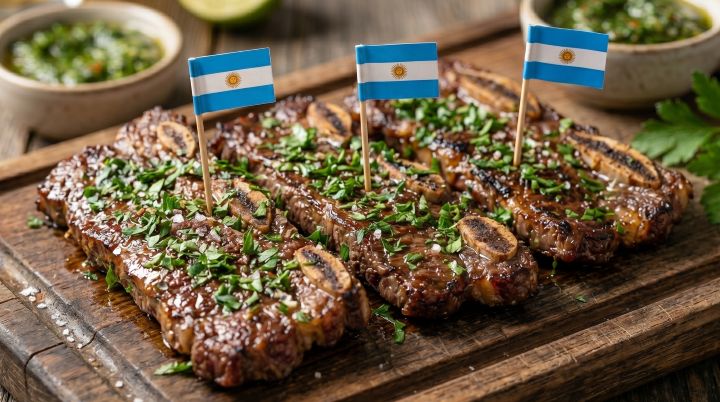
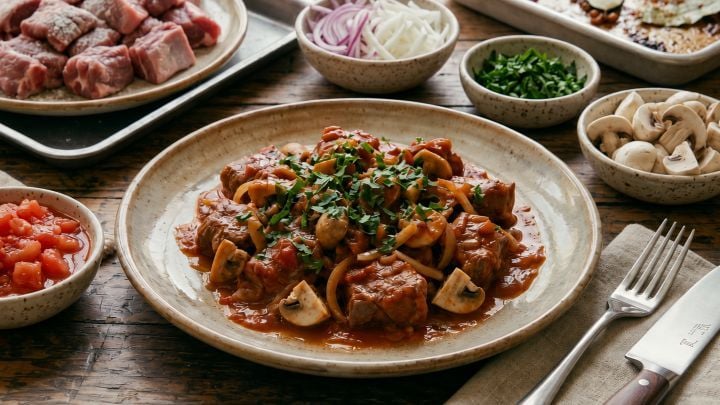
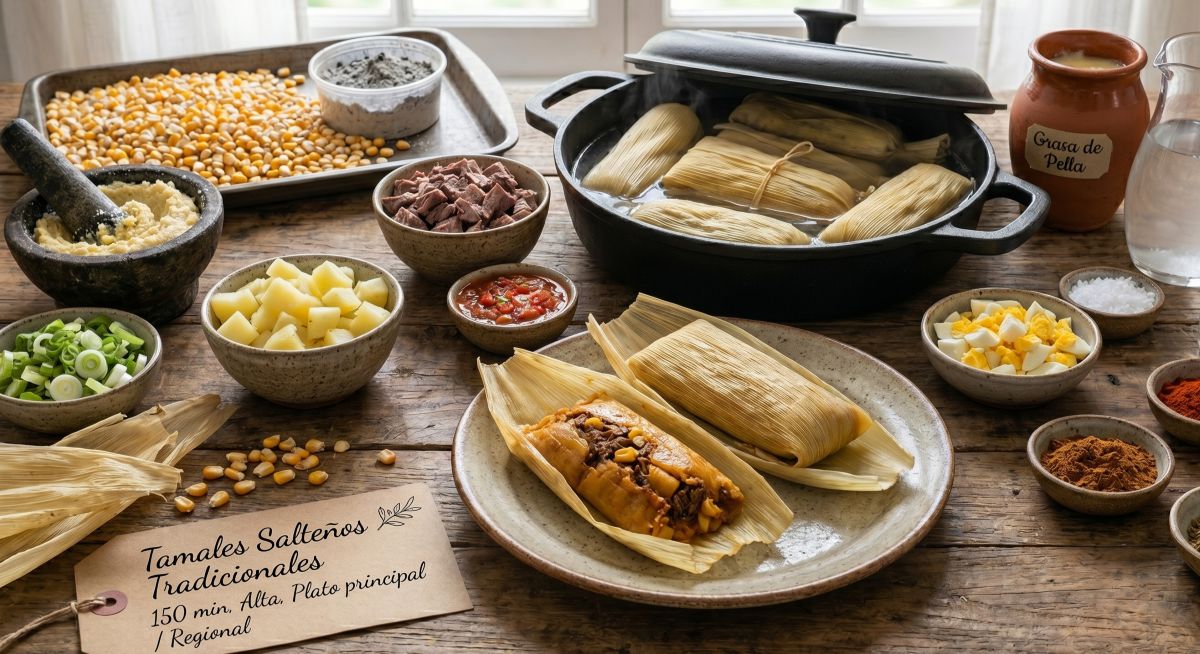
Nothing beats the taste of home. These are the recipes that belong to Argentina's culinary history: from a properly made locro to the tricks behind empanadas with hand-cut beef that fall apart in your mouth. It is not only about dishes but about techniques, family stories and the legacy of criollo cooking — each recipe close to the tradition, but written with the precision that makes it work every time.