What is samovar?
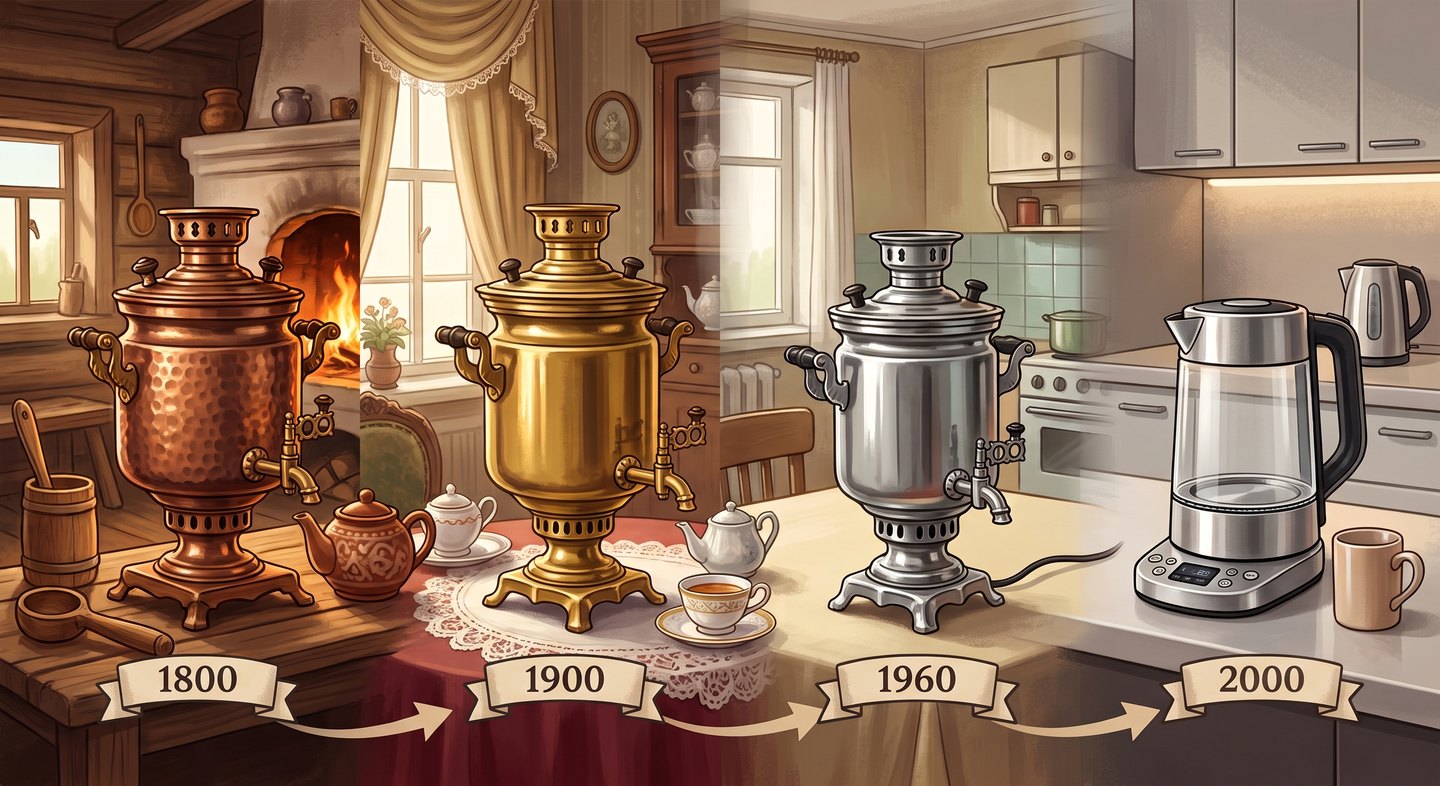
A samovar is a metal vessel that heats water and holds it hot for hours, with a tap to serve it. It is the centrepiece of the Russian tea table, and it works the opposite of what its shape suggests: the tap does not pour tea, it pours hot water. The tea sits separately, as a very strong concentrate in a small pot on top, and each cup is built by mixing the two.
How it works: the fire sits inside
What separates a samovar from a large kettle is a vertical pipe running through its middle. The embers go in there — charcoal, wood chips or dry pine cones — and the water surrounds that pipe on every side.
Two strengths follow. The exchange surface is enormous, so it heats quickly on very little fuel. And the smoke rises through the pipe and leaves at the top without ever touching the water, which is what makes it possible to burn resinous cones without the water tasting of them.
A draught pipe set on top creates the airflow that keeps the embers alive.
Why it holds itself
As the embers burn down, the power falls on its own until it matches the heat the water is losing. The result is an equilibrium lasting hours with nobody adjusting anything: a thermostat made of physics rather than circuitry.
The concentrate pot sits on the mouth of the pipe and is warmed by heat that was leaving anyway. It costs no extra fuel.
And the tap solves what a vacuum flask pays dearly for: serving costs no heat. No lid, no lifting, no pouring.
Zavarka: why no tea comes out of the tap
Zavarka is black tea brewed far stronger than anyone drinks it. A little zavarka goes in the cup and is topped up with water from the samovar, so each person sets their own strength.
The advantage is not ceremonial: nothing sits for hours on the heat. The concentrate is made once, and water does not spoil from being hot. Tea held hot all afternoon would turn bitter; this scheme prevents that by design.
The Turkish çaydanlık is the same idea without electricity or embers: two stacked kettles, water below, strong tea above.
Tula, city of samovars and of prianiki
Tula, south of Moscow, was the city of metal — also the city of the arms works — and brass and copper are what a samovar is made of. The association is fossilised in a Russian proverb: to go to Tula with your own samovar, the equivalent of carrying coals to Newcastle.
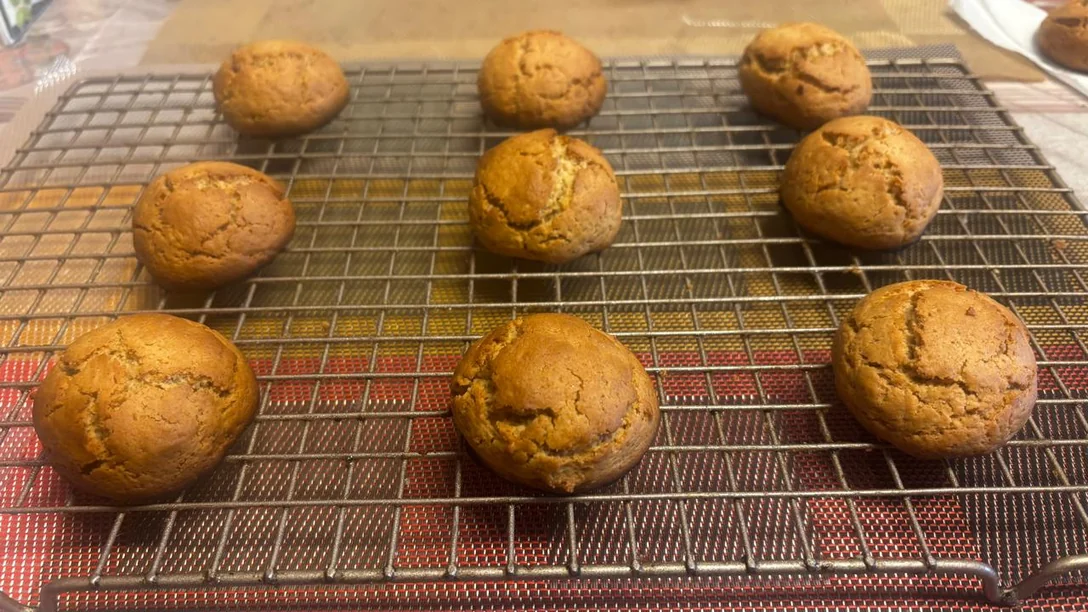
The same city is famous for its prianiki, spice cakes printed with carved wooden moulds. That is not a geographical coincidence: prianiki are precisely what is eaten with the tea from the samovar. Both traditions have their own museum in Tula.
Four eras in one object
1800 — the copper one, beside the stove. Hammered by hand and set next to the fire that was already burning for something else. Tula was the city of metal, and the samovar came out of the same workshops as everything else.
1900 — the brass one, in the parlour. The golden age. It stops being an appliance and becomes a status object: at the centre of the table, surrounded by its porcelain service.
1960 — the Soviet electric one. Nickel-plated and with a cord. A heating element replaces the ember pipe, and the samovar moves into the flat, where charcoal cannot be lit. It is the one still found second-hand today.
2000 — the electric kettle. No longer a samovar, but the same job: holding water at a chosen temperature for hours. The object died out; the function did not.
Charcoal, electric, and which is worth having
Charcoal samovars are outdoor objects: they cannot be lit indoors. In a flat they are decoration, not equipment.
Electric ones have existed since Soviet times and are now the majority. They swap the pipe for a heating element and lose the charcoal and the smoke, but keep what matters: the tap, the pot on top and the holding for hours.
⚠️ On an antique samovar it is worth checking the inner tinning before drinking from it: it wears with the years, which is why many old pieces are for looking at rather than serving from.
The same principle without a samovar
What the samovar does — low, steady heat with no supervision — can be had other ways. A kettle left on a clay oven that has already gone out does exactly that with residual heat. A variable-temperature electric kettle does it with a thermostat.
Which device suits which drink is covered in the tip on how to keep a drink hot without boiling it.
The recipe
Frequently asked questions
- Does tea come out of a samovar tap?
No, hot water. The tea sits separately as a concentrate (zavarka) in the small pot on top. Each cup is built by mixing the two.
- What is burned inside a samovar?
Charcoal, wood chips or dry pine cones, inside the vertical central pipe. The smoke leaves at the top and never touches the water.
- Can a samovar be used indoors?
An electric one, yes. A charcoal one, no: it needs a flue, so it belongs in a yard or outdoors.
- Is it suitable for mate or green tea?
Not for those. A samovar holds its water close to boiling, which is right for black tea and far too hot for mate or green tea.
Updated on 2026-08-30T19:00:00.000Z