Salsa Criolla – Argentine Onion and Pepper Relish
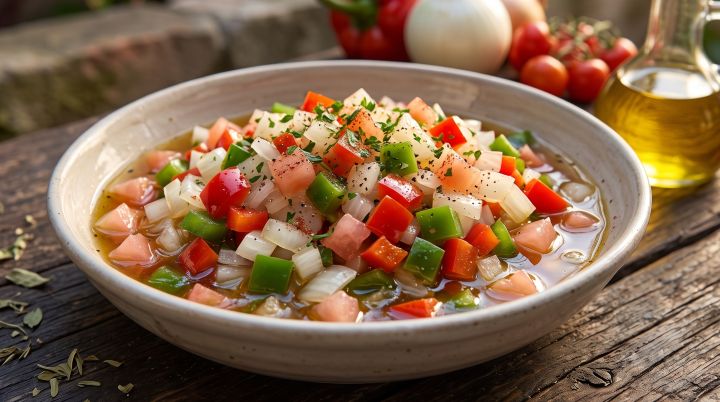
The relish that belongs beside every Argentine asado: onion, bell peppers and tomato in tiny even cubes, dressed with vinegar and olive oil.
It is not simply chopped vegetables. The cut has to be uniform — about 0.5 cm — because the point is that every spoonful carries a bit of each thing, not that it turns to purée.
And it is never served straight away. Two or three hours in the refrigerator are what let the vinegar take the harshness out of the raw onion and bring it together with the sweetness of the pepper and the tomato. Made and served in the same minute, it is just sharp onion.
Ingredients
- 2 medium white onions
- 1 large red bell pepper
- 1 large green bell pepper
- 2 firm plum tomatoes, seeded
- 1/2 cup white vinegar (or cider vinegar)
- 1/2 cup extra virgin olive oil
- Fine salt, black pepper and a pinch of chili flakes
- 1 tbsp very finely chopped fresh parsley (optional)
Method
- 1
The cut (brunoise): the whole point of this relish is uniformity. Cut the onion, both peppers and the tomato into small, even cubes of about 0.5 cm. It should not be a purée, but small enough that every spoonful carries a bit of each.
- 2
Seed the tomatoes and remove their liquid before cutting. Otherwise the relish turns watery and ferments quickly.
- 3
In a bowl, combine all the cut vegetables. Add the salt, the pepper and the chili flakes. Pour in the vinegar and mix well so the salt starts drawing the juices out of the vegetables.
- 4
Add the olive oil last. Vinegar and oil together form the emulsion that keeps the vegetables from drying out.
- 5
The resting time is not optional. Cover the bowl and refrigerate for at least 2-3 hours before serving. That is when the flavors come together and the vinegar lightly 'cooks' the onion, taking away its raw edge.
- 6
Before serving, stir it once more and check the salt. Covered in the fridge it keeps for two or three days, and it gets milder with each one.

Argentine Classics: Tradition with Identity
Nothing beats the taste of home. These are the recipes that belong to Argentina's culinary history: from a properly made locro to the tricks behind empanadas with hand-cut beef that fall apart in your mouth. It is not only about dishes but about techniques, family stories and the legacy of criollo cooking — each recipe close to the tradition, but written with the precision that makes it work every time.